Showing posts with label Plants. Show all posts

Tulip


  • Kingdom    :Plantae
  • Clade          :Angiosperms
  • Clade          :Monocots
  • Order          :Liliales
  • Family        :Liliaceae
  • Tribe           :Lilieae
  • Genus         :Tulipa


Tulips (Tulipa) form a genus of spring-blooming perennial herbaceous bulbiferous geophytes (having bulbs as storage organs). The flowers are usually large, showy and brightly coloured, generally red, yellow, or white. They often have a different coloured blotch at the base of the tepals (petals and sepals, collectively), internally. Because of a degree of variability within the populations, and a long history of cultivation, classification has been complex and controversial. The tulip is a member of the Liliaceae (lily) family, along with 14 other genera, where it is most closely related to Amana, Erythronium and Gagea in the tribe Lilieae. There are about 75 species, and these are divided among four subgenera. The name "tulip" is thought to be derived from a Persian word for turban, which it may have been thought to resemble. Tulips originally were found in a band stretching from Southern Europe to Central Asia, but since the seventeenth century have become widely naturalised and cultivated (see map). In their natural state they are adapted to steppes and mountainous areas with temperate climates. Flowering in the spring, they become dormant in the summer once the flowers and leaves die back, emerging above ground as a shoot from the underground bulb in early spring.

While tulips had probably been cultivated in Asia from the tenth century, they did not come to the attention of the west till the sixteenth century, when western diplomats to the Ottoman court observed and reported on them. They were rapidly introduced into Europe and cultivated and became a frenzied commodity during Tulip mania. Tulips were frequently depicted in Dutch Golden Age paintings, and have become associated with the Netherlands, the major producer for world markets, ever since. In the seventeenth century Netherlands, during the time of the Tulip mania, an infection of tulip bulbs by the tulip breaking virus created variegated patterns in the tulip flowers that were much admired and valued. This phenomenon was referred to as "broken".

Breeding programs have produced thousands of hybrid and cultivates in addition to the original species (known in horticulture as botanical tulips). They are popular throughout the world, both as ornamental garden plants and as cut flowers.

Description 

Tulipa (tulips) is a genus of spring-blooming perennial herbaceous bulbiferous geophytes, dying back after flowering to an underground storage bulb. Depending on the species, tulip plants can be between 4 inches (10 cm) and 28 inches (71 cm) high.

Flowers: The tulip's flowers are usually large and are actinomorphic (radially symmetric) and hermaphrodite (contain both male (androecium) and female (gynoecium) characteristics), generally erect, or more rarely pendulous, and are arranged more usually as a single terminal flower, or when pluriflor as two to three (e.g. Tulipa turkestanica), but up to four, flowers on the end of a floriferous stem (scape), which is single arising from amongst the basal leaf rosette. In structure, the flower is generally cup or star shaped. As with other members of Liliaceae the perianth is undifferentiated (perigonium) and biseriate (two whorled), formed from six free (i.e. apotepalous) caducous tepals arranged into two separate whorls of three parts (trimerous) each. The two whorls represent three petals and three sepals, but are termed tepals because they are nearly identical. The tepals are usually petaloid (petal like), being brightly coloured, but each whorl may be different, or have different coloured blotches at their bases, forming darker colouration on the interior surface. Tulip flowers come in a wide variety of colours, except pure blue (several tulips with "blue" in the name have a faint violet hue), and have absent nectaries.

Distribution and habitat

Tulips are mainly distributed along a band corresponding to Latitude 40o north, from south-east of Europe (Ukraine, Russia) and Turkey in the west, through the Levant (Syria, Israel, Palestinian Territories, Lebanon and Jordan). From there it extends eastwards through Jere van, (Armenia) and Baku (Azerbaijan) and on the eastern shore of the Caspian Sea through Turkmenistan, Bukhara, Samarkand and Tashkent (Uzbekistan), to the eastern end of the range in the Pamir-Alai and Tien-Shan mountains in Central Asia, which form the centre of diversity.Further to the east, Tulipa is found in the western Himalayas, southern Siberia, inner Mongolia, and as far as the northwest of China. While authorities have stated that no tulips west of the Balkans are native, subsequent identification of Tulipa sylvestris subsp. australis as a native of the Iberian peninsula and adjacent North Africa shows that this may be a simplification. In addition to these regions in the west tulips have been identified in Greece, Cyprus and the Balkans. In the south, Iran marks its furthest extent, while the northern limit is the Ukraine.Although tulips are also throughout most of the Mediterranean and Europe, these regions do not form part of the natural distribution. Tulips were brought to Europe by travellers and merchants from Anatolia and Central Asia for cultivation, from where they escaped and naturalised (see map). For instance, less than a half of those species found in Turkey are actually native.These have been referred to as neo-tulipae.

Tulips are indigenous to mountainous areas with temperate climates, where they are a common element of steppe and winter-rain Mediterranean vegetation. They thrive in climates with long, cool springs and dry summers. Tulips are most commonly found in meadows, steppes and chaparral, but also introduced in fields, orchards, roadsides and abandoned gardens.

Subdivision

The genus, which includes about 75 species, is divided into four sub genera.

Clusianae (4 species)
Orithyia (4 species)
Tulipa (52 species)
Eriostemones (16 species)
Etymology
The word tulip, first mentioned in western Europe in or around 1554 and seemingly derived from the "Turkish Letters" of diplomat Ogier Ghiselin de Busbecq, first appeared in English as tulipa or tulipant, entering the language by way of French: tulipe and its obsolete form tulipan or by way of Modern Latin tulīpa, from Ottoman Turkish tülbend ("muslin" or "gauze"), and may be ultimately derived from the Persian: دلبند‎ delband ("Turban"), this name being applied because of a perceived resemblance of the shape of a tulip flower to that of a turban.This may have been due to a translation error in early times, when it was fashionable in the Ottoman Empire to wear tulips on turbans. The translator possibly confused the flower for the turban.

Water Lily


  • Kingdom      :Plantae
  • Clade            :Angiosperms
  • Order            :Nymphaeales
  • Family          :Nymphaeaceae


Nymphaeaceae /ˌnɪmfiːˈeɪsiː/ is a family of flowering plants, commonly called water lilies. They live as rhizomatous aquatic herbs in temperate and tropical climates around the world. The family contains five genera with about 70 known species.Water lilies are rooted in soil in bodies of water, with leaves and flowers floating on or emergent from the surface. The leaves are round, with a radial notch in Nymphaea and Nuphar, but fully circular in Victoria and Euryale.

Water lilies are a well studied clade of plants because their large flowers with multiple unspecialized parts were initially considered to represent the floral pattern of the earliest flowering plants, and later genetic studies confirmed their evolutionary position as basal angiosperms. Analyses of floral morphology and molecular characteristics and comparisons with a sister taxon, the family Cabombaceae, indicate, however, that the flowers of extant water lilies with the most floral parts are more derived than the genera with fewer floral parts. Genera with more floral parts, Nuphar, Nymphaea, Victoria, have a beetle pollination syndrome, while genera with fewer parts are pollinated by flies or bees, or are self- or wind-pollinated.Thus, the large number of relatively unspecialized floral organs in the Nymphaeaceae is not an ancestral condition for the clade.

Water lilies do not have surface leaves during winter, and therefore the gases in the rhizome lacunae access equilibrium with the gases of the sediment water. The leftover of internal pressure is embodied by the constant streams of bubbles that outbreak when rising leaves are ruptured in the spring.

Description:

The Nymphaeaceae are aquatic, rhizomatous herbs. The family is further characterized by scattered vascular bundles in the stems, and frequent presence of latex, usually with distinct, stellate-branched sclereids projecting into the air canals. Hairs are simple, usually producing mucilage (slime). Leaves are alternate and spiral, opposite or occasionally whorled, simple, peltate or nearly so, entire to toothed or dissected, short to long petiolate), with blade submerged, floating or emergent, with palmate to pinnate venation. Stipules are either present or absent. Flowers are solitary, bisexual, radial, with a long pedicel and usually floating or raised above the surface of the water, with girdling vascular bundles in receptacle. Female and male parts of the flower are active at different times usually, to facilitate cross-pollination. Sepals are 4-12, distinct to connate, imbricate, and often petal-like. Petals lacking or 8 to numerous, inconspicuous to showy, often intergrading with stamens. Stamens are 3 to numerous, the innermost sometimes represented by staminodes. Filaments are distinct, free or adnate to petaloid staminodes, slender and well differentiated from anthers to laminar and poorly differentiated from anthers; pollen grains usually monosulcate or lacking apertures. Carpels are 3 to numerous, distinct or connate. Fruit is an aggregate of nuts, a berry, or an irregularly dehiscent fleshy spongy capsule. Seeds are often arillate, more or less lacking sperm.

Taxonomy

Nymphaeaceae has been investigated systematically for decades because botanists considered their floral morphology to represent one of the earliest groups of angiosperms.Modern genetic analyses by the Angiosperm Phylogeny Group researchers has confirmed its basal position among flowering plants.In addition, the Nymphaeaceae are more genetically diverse and geographically dispersed than other basal angiosperms.Nymphaeaceae is placed in the order Nymphaeales, which is the second diverging group of angiosperms after Amborella in the most widely accepted flowering plant classification system, APG IV system.

Nymphaeaceae is a small family of three to six genera: Barclaya, Euryale, Nuphar, Nymphaea, Ondinea, and Victoria. The genus Barclaya is sometimes given rank as its own family, Barclayaceae, on the basis of an extended perianth tube (combined sepals and petals) arising from the top of the ovary and by stamens that are joined in the base. However, molecular phylogenetic work includes it in Nymphaeaceae.The genus Ondinea has recently been shown to be a morphologically aberrant species of Nymphaea, and is now included in this genus.The genera Euryale, of far east Asia, and Victoria, from South America, are closely related despite their geographic distance, but their relationship toward Nymphaea need further studies.

The sacred lotus was once thought to be a water lily, but is now recognized to be a highly modified eudicot in its own family Nelumbonaceae of the order Proteales.

Asian bleeding-heart


  • Kingdom            :Plantae
  • Phylum               :Angiosperms
  • Class                   :Eudicots
  • Order                  :Ranunculales
  • Family                :Papaveraceae
  • Genus                 :Lamprocapnos
  • Scientific Name :Lamprocapnos spectabilis


Lamprocapnos spectabilis (bleeding heart or Asian bleeding-heart) is a species of flowering plant in the poppy family Papaveraceae, native to Siberia, northern China, Korea and Japan. It is the sole species in the monotypic genus Lamprocapnos, but is still widely referenced under its old name Dicentra spectabilis (now listed as a synonym). It is valued in gardens and in floristry for its heart-shaped pink and white flowers, borne in spring.

Other common names include "lyre flower" and "lady-in-a-bath".

Description

The two inner petals are made visible when the two pink outer petals are pulled apart. Their shape yields the common name "lady-in-a-bath".
The Asian bleeding-heart grows to 120 cm (47 in) tall by 45 cm (18 in) wide. It is a rhizomatous herbaceous perennial with 3-lobed compound leaves on fleshy green to pink stems. The arching horizontal racemes of up to 20 pendent flowers are borne in spring and early summer. The outer petals are bright fuchsia-pink, while the inner ones are white. The flowers strikingly resemble the conventional heart shape, with a droplet beneath – hence the common name. The pure white-flowered 'Alba', somewhat more robust than the species, is a popular cultivar. The plant sometimes behaves as a spring ephemeral, going dormant in summer.

Cultivation

In a moist and cool climate, it will grow in full sun, but in warmer and drier climates it requires some shade.

Aphids, slugs and snails sometimes feed on the leaves.

Clumps remain compact for many years and do not need dividing. They have brittle roots which are easily damaged when disturbed. Root cuttings should be taken in spring.

Seeds with whitish elaiosomes are borne in long pods. They must be sown while fresh. Division should be done in the late fall (autumn) or early spring.

Cultivars

Several cultivars have been selected. 'Alba' has white flowers, and 'Gold Heart', introduced from Hadspen Garden, England, in 1997, has yellow leaves.

The species, the cultivar 'Alba' and the red-and-white cultivar 'Valentine' have gained the Royal Horticultural Society's Award of Garden Merit.

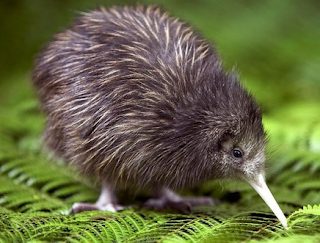
Kiwi Bird

Kingdom      :Animalia Phylum         :Chordata Class             :Aves Clade            :Novaeratitae Order           :Apterygiform...