Showing posts with label Bird. Show all posts

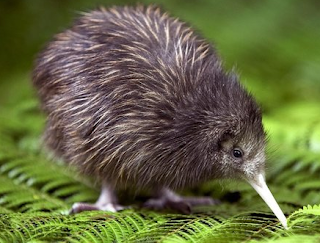
Kiwi Bird

  • Kingdom      :Animalia
  • Phylum         :Chordata
  • Class             :Aves
  • Clade            :Novaeratitae
  • Order           :Apterygiformes
  • Family          :Apterygidae
  • Genus           :Apteryx
  • Specie Name:Apteryx australis
Kiwi (/ˈkiːwi/ KEE-wee)] or kiwis are flightless birds native to New Zealand, in the genus Apteryx and family Apterygidae. Approximately the size of a domestic chicken, kiwi are by far the smallest living ratites (which also consist of ostriches, emus, rheas, and cassowaries), and lay the largest egg in relation to their body size of any species of bird in the world.

DNA sequence comparisons have yielded the surprising conclusion that kiwi are much more closely related to the extinct Malagasy elephant birds than to the moa with which they shared New Zealand.There are five recognised species, four of which are currently listed as vulnerable, and one of which is near-threatened. All species have been negatively affected by historic deforestation but currently the remaining large areas of their forest habitat are well protected in reserves and national parks. At present, the greatest threat to their survival is predation by invasive mammalian predators.

The unique adaptations of kiwi, such as their large eggs, short and stout legs, or using their nostrils at the end of their long beak to detect prey before they ever see it, have helped the bird to become internationally well-known.

The kiwi is an icon of New Zealand, and the association is so strong that the term Kiwi is used internationally as the colloquial demonym for New Zealanders.

Description

Their adaptation to a terrestrial life is extensive: like all the other ratites (ostrich, emu, rhea and cassowary), they have no keel on the sternum to anchor wing muscles. The vestigial wings are so small that they are invisible under the bristly, hair-like, two-branched feathers. While most adult birds have bones with hollow insides to minimise weight and make flight practicable, kiwi have marrow, like mammals and the young of other birds. With no constraints on weight due to flight requirements, brown kiwi females carry and lay a single egg that may weigh as much as 450 g (16 oz). Like most other ratites, they have no uropygial gland (preen gland). Their bill is long, pliable and sensitive to touch, and their eyes have a reduced pecten. Their feathers lack barbules and aftershafts, and they have large vibrissae around the gape. They have 13 flight feathers, no tail and a small pygostyle. Their gizzard is weak and their caecum is long and narrow.

The eye of the kiwi is the smallest relative to body mass in all avian species resulting in the smallest visual field as well. The eye has small specialisations for a nocturnal lifestyle, but kiwi rely more heavily on their other senses (auditory, olfactory, and somatosensory system). The sight of the kiwi is so underdeveloped that blind specimens have been observed in nature, showing how little they rely on sight for survival and foraging. In an experiment, it was observed that one-third of a population of A. rowi in New Zealand under no environmental stress had ocular lesions in one or both eyes. The same experiment examined three specific specimens that showed complete blindness and found them to be in good physical standing outside of ocular abnormalities.

Unlike virtually every other palaeognath, which are generally small-brained by bird standards, kiwi have proportionally large encephalisation quotients. Hemisphere proportions are even similar to those of parrots and songbirds, though there is no evidence of similarly complex behaviour.

Relationship to humans


The Māori traditionally believed that kiwi were under the protection of Tane Mahuta, god of the forest. They were used as food and their feathers were used for kahu kiwi—ceremonial cloaks. Today, while kiwi feathers are still used, they are gathered from birds that die naturally or through road accidents or predation, or from captive birds. Kiwi are no longer hunted and some Maori consider themselves the birds' guardians.
Scientific documentation
In 1813, George Shaw named the genus Apteryx in his species description of the southern brown kiwi, which he called "the southern apteryx". Captain Andrew Barclay of the ship Providence provided Shaw with the specimen. Shaw's description was accompanied by two plates, engraved by Frederick Polydore Nodder; they were published in volume 24 of The Naturalist's Miscellany.

Zoos

In 1851, London Zoo became the first zoo to keep kiwi. The first captive breeding took place in 1945. As of 2007 only 13 zoos outside New Zealand hold kiwi. The Frankfurt Zoo has 12, the Berlin Zoo has seven, Walsrode Bird Park has one, the Avifauna Bird Park in the Netherlands has three, the San Diego Zoo has five, the San Diego Zoo Safari Park has one, the National Zoo in Washington, DC has eleven, the Smithsonian Conservation Biology Institute has one, and the Columbus Zoo and Aquarium has three.

American Robin


  • Kingdom              :Animalia
  • Phylum                 :Chordata
  • Class                     :Aves
  • Order                   :Passeriformes
  • Family                  :Turdidae
  • Genus                   :Turdus
  • Scientific Name   :Turdus migratorius

The American robin (Turdus migratorius) is a migratory songbird of the true thrush genus and Turdidae, the wider thrush family. It is named after the European robin because of its reddish-orange breast, though the two species are not closely related, with the European robin belonging to the Old World flycatcher family. The American robin is widely distributed throughout North America, wintering from southern Canada to central Mexico and along the Pacific Coast. It is the state bird of Connecticut, Michigan, and Wisconsin.According to some sources, the American robin ranks behind only the red-winged blackbird (and just ahead of the introduced European starling and the not-always-naturally-occurring house finch) as the most abundant extant land bird in North America.It has seven subspecies, but only T. m. confinis of Baja California Sur is particularly distinctive, with pale gray-brown underparts.

Behaviour:

The American robin is active mostly during the day and assembles in large flocks at night. Its diet consists of invertebrates (such as beetle grubs, earthworms, and caterpillars), fruits, and berries. It is one of the earliest bird species to lay eggs, beginning to breed shortly after returning to its summer range from its winter range. Its nest consists of long coarse grass, twigs, paper, and feathers, and is smeared with mud and often cushioned with grass or other soft materials. It is one of the first birds to sing at dawn, and its song consists of several discrete units that are repeated.

Diet:

The American robin's diet generally consists of around 40 percent small invertebrates (mainly insects), such as earthworms, beetle grubs, caterpillars and grasshoppers, and 60 percent wild and cultivated fruits and berries.Their ability to switch to berries allows them to winter much farther north than most other North American thrushes. They will flock to fermented Pyracantha berries, and after eating sufficient quantities will exhibit intoxicated behaviour such as falling over while walking. Robins forage primarily on the ground for soft-bodied invertebrates, and find worms by sight (and sometimes by hearing), pouncing on them and then pulling them up.Nestlings are fed mainly on worms and other soft-bodied animal prey. In some areas, robins, particularly of the coastal race T. m. caurinus, will feed on beaches, taking insects and small mollusks.

The robin uses auditory, visual, olfactory and possibly vibrotactile cues to find prey, but vision is the predominant mode of prey detection.It is frequently seen running across lawns picking up earthworms, and its running and stopping behaviour is a distinguishing characteristic. In addition to hunting visually, it also has the ability to hunt by hearing. Experiments have discovered that it can find worms underground by simply using its listening skills.It typically will take several short hops and then cock its head left, right or forward to detect movement of its prey. In urban areas, robins will gather in numbers soon after lawns are mowed or where sprinklers are in use.They also are attracted to freshly turned earth in gardens, where worms and grubs are abundant targets. Occasionally, they may visit bird feeders if meal worms or animal-fat suet is offered.

Alpine Ibex


  • Kingdom               :Animalia
  • Phylum                 :Chordata
  • Class                      :Mammalia
  • Order                    :Artiodactyla
  • Family                   :Bovidae
  • Subfamily             :Caprinae
  • Genus                    :Capra
  • Scientific Name    :Capra ibex


The Alpine ibex (Capra ibex), also known as the steinbock, bouquetin, or simply ibex, is a species of wild goat that lives in the mountains of the European Alps. It is a sexually dimorphic species with larger males who carry larger, curved horns. The coat colour is typically brownish grey. Alpine ibex tend to live in steep, rough terrain near the snow line. They are also social, although adult males and females segregate for most of the year, coming together only to mate. Four distinct groups exist; adult male groups, female-offspring groups, groups of young individuals, and mixed sex groups.

During the breeding season, males fight for access to females and use their long horns in agnostic behaviours. After being extirpated from most areas by the 19th century, the Alpine ibex was successfully reintroduced to parts of its historical range. All individuals living today descend from the stock in Gran Paradiso National Park in Aosta Valley and from the neighbouring valley of Maurienne, now part of the Vanoise National Park linked to the former. These two national parks are connected and have been specially created to help the ibex to thrive. The ibex is the emblem of both the Gran Paradiso National Park and the Vanoise National Park. The species is currently listed as of least concern by the IUCN, but went through a population bottleneck and therefore has low genetic diversity.

Appearance

Compared with other members of its genus, the Alpine ibex has a short, broad head and a duller coat. It has brownish grey hair over most of the body, a pale abdomen and slightly darker markings on the chin and throat and in a stripe along the back. They moult twice a year, firstly in April or May, and then again in September, when they replace the short summer coat with thicker hair and a woolly undercoat.

Males commonly grow to a height of 90 to 101 centimetres (35 to 40 in) at the withers, with a body length of 149 to 171 centimetres (59 to 67 in) and weigh from 67 to 117 kilo grams (148 to 258 lb). Females are noticeably smaller, with a shoulder height of 73 to 84 centimetres (29 to 33 in), a body length of 121 to 141 centimetres (48 to 56 in), and a weight of 17 to 32 kilo grams (37 to 71 lb). Both male and female Alpine ibexes have large, backwards-curving, horns with numerous ridges along their length. At 69 to 98 centimetres (27 to 39 in), those of the males are substantially larger than those of females, which reach only 18 to 35 centimetres (7.1 to 13.8 in) in length.

Distribution and ecology:

The Alpine ibex was, at one point, restricted only to the Gran Paradiso National Park in northern Italy, and in the Maurienne Valley in the French Alps but in recent years it was both reintroduced to and recolonised most of the European Alps. It is now found in most or all the Italian and French alpine ranges, southern Germany, Switzerland and Austria. It was also introduced to Bulgaria and Slovenia.

An excellent climber, its preferred habitat is the rocky region along the snow line above alpine forests, where it occupies steep, rough terrain at elevations of 1,800 to 3,300 metres (5,900 to 10,800 ft). Alpine ibex are typically absent from woodland areas although adult males in densely populated areas may stay in larch and mixed larch-spruce woodland if there is no snow.Males spend the winter in coniferous forests.For most of the year, males and females occupy different habitat. Females rely on steep terrain more so than males.Males use lowland meadows during the spring, which is when snow melts and green grass appears.They then climb to alpine meadows during the summer. When winter arrives, both sexes move to steep rocky slopes that amass little snow.They prefer slopes of 30–45° and use small caves and overhangs for shelter.Home ranges are highly variable, depending on the availability of resources, and vary in size throughout the year. Figures of anything from 180 to 2,800 hectares (0.69 to 10.81 sq mi; 1.8 to 28.0 km2) have been recorded.Home ranges tend to be largest during summer and autumn, smallest in winter and intermediate in spring.Female home ranges are usually smaller than those of males. Alpine ibexes appear to have a low rate of predation and in Gran Paradiso typically die of age, starvation or disease.

Humming Bird


  • Kingdom           :Animalia
  • Phylum              :Chordata
  • Class                  :Aves
  • Order                 :Apodiformes
  • Family              :Trochilidae


There are nearly 350 known species of hummingbird, found throughout the Southern Hemisphere. Although some species of hummingbird are occasionally found further north, these small birds tend to prefer the more tropical climates.
Hummingbirds beat their wings 15-80 times every second (depending on the species) meaning that the hummingbird has the incredible ability to hover in the air. The hummingbird is also the only species of bird that is able to fly backwards.

The bee hummingbird is native to Cuba and is the smallest bird in the world, measuring around less than 5cm tall and the bee hummingbird is around the same weight as a penny. The giant hummingbird found in the Andes is the world's largest hummingbird measuring more than 20cm in height.

Hummingbirds have a long, pointed beak which when combined with the hummingbird's extendible tongue allows the hummingbird to gather nectar from deep inside flowers. As nectar is not an adequate source of protein, hummingbirds also prey upon insects and spiders in order to get all of their nutrients, especially when the hummingbirds are feeding their young.

Many species of hummingbird do not survive their first year of life due to their vulnerability. Those hummingbird individuals however that do survive tend to have an average lifespan of around 4 years but some hummingbird individuals can live for much longer, with the oldest recorded hummingbird being at least 12 years old.

Female hummingbirds make a cup shaped nest in the trees with male hummingbirds not helping with the nest building at all. Most species of hummingbird lay 2 white coloured eggs which are surprisingly large when the small size of the hummingbird is considered. The hummingbird eggs usually hatch within 3 weeks to reveal the tiny hummingbird chicks.

Due to their small size, hummingbirds are preyed upon by a variety of animals including snakes, lizards and larger birds. Both wild and domestic cats also prey on the tiny hummingbird, but hummingbirds are known to be a difficult meal to catch for any predators due to their speed and agility particularly in the air.

Hummingbirds have played a significant part in local myths and folklore. One of the Aztec gods was depicted as a hummingbird and one group of people believed that the hummingbird brought fire to the world. The tiny Caribbean islands of Trinidad and Tobago is known as the land of the hummingbird and the hummingbird can even be seen on their coat of arms.

The hummingbirds name is thought to have originated from the noise the hummingbirds wings make when the hummingbird is hovering.

American White Ibis


  • Kingdom               :Animalia
  • Phylum                  :Chordata
  • Class                      :Aves
  • Order                    :Ciconiiformes
  • Family                   :Threskiornithidae
  • Genus                    :Eudocimus
  • Scientific Name    :Eudocimus albus

The American white ibis (Eudocimus albus) is a species of bird in the ibis family, Threskiornithidae. It is found from Virginia via the Gulf Coast of the United States south through most of the coastal New World tropics.This particular ibis is a medium-sized bird with an overall white plumage, bright red-orange down-curved bill and long legs, and black wing tips that are usually only visible in flight. Males are larger and have longer bills than females. The breeding range runs along the Gulf and Atlantic Coast, and the coasts of Mexico and Central America. Outside the breeding period, the range extends further inland in North America and also includes the Caribbean. It is also found along the northwestern South American coastline in Colombia and Venezuela. Populations in central Venezuela overlap and interbreed with the scarlet ibis. The two have been classified by some authorities as a single species.

Their diet consists primarily of small aquatic prey, such as insects and small fishes. Crayfish are its preferred food in most regions, but it can adjust its diet according to the habitat and prey abundance. Its main foraging behavior is probing with its beak at the bottom of shallow water to feel for and capture its prey. It does not see the prey.

During the breeding season, the American white ibis gathers in huge colonies near water. Pairs are predominantly monogamous and both parents care for the young, although males tend to engage in extra-pair copulation with other females to increase their reproductive success. Males have also been found to pirate food from unmated females and juveniles during the breeding season.

Human pollution has affected the behavior of the American white ibis via an increase in the concentrations of methylmercury, which is released into the environment from untreated waste. Exposure to methylmercury alters the hormone levels of American white ibis, affecting their mating and nesting behavior and leading to lower reproduction rates.
Taxonomy
The American white ibis was one of the many bird species originally described by Carl Linnaeus in the 1758 10th edition of his Systema Naturae, where it was given the binomial name of Scolopax albus.The species name is the Latin adjective albus "white".Alternative common names that have been used include Spanish curlew and white curlew.English naturalist Mark Catesby mistook immature birds for a separate species, which he called the brown curlew.Local creole names in Louisiana include bec croche and petit flaman.

Johann Georg Wagler gave the species its current binomial name in 1832 when he erected the new genus Eudocimus, whose only other species is the scarlet ibis (E. ruber). There has long been debate on whether the two should be considered subspecies or closely related species, and the American Ornithologists' Union considers the two to be a superspecies as they are parapatric.The lack of observed hybrids was a large factor in the view that the species were separate.

However, in a field study published in 1987, researchers Cristina Ramo and Benjamin Busto found evidence of interbreeding in a population where the ranges of the scarlet and white ibises overlap along the coast and in the Llanos region of Colombia and Venezuela. They observed individuals of the two species mating and pairing, as well as hybrid ibises with pale orange plumage, or white plumage with occasional orange feathers; their proposal that these birds be classified as a single species,has been followed by least one field guide.Hybrid ibises have also been recorded in Florida, where the scarlet ibis has been introduced into wild populations of American white ibis. Birds of intermediate to red plumage have persisted for generations.

Ornithologists James Hancock and Jim Kushlan also consider the two to be a single species, with the differences in plumage, size, skin coloration and degree of bill darkening during breeding season forming the diagnostic characters. They have proposed the populations recontacted in northwestern South America after a period of separation, and that the color difference is likely due to the presence of an enzyme that allows uptake of pigment in the diet. They have questioned whether white-plumaged birds of South America are in fact part of the ruber rather than the albus taxon, and acknowledge that more investigation is needed to determine this
Description
The white plumage and pink facial skin of adult American white ibises are distinctive. Adults have black wingtips that are usually only visible in flight.In non-breeding condition the long downcurved bill and long legs are bright red-orange.During the first ten days of the breeding season, the skin darkens to a deep pink on the bill and an almost purple-tinted red on the legs. It then fades to a paler pink, and the tip of the bill becomes blackish.It is difficult to determine the sex of an adult American white ibis from its external appearance, since the sexes have similar plumage.However, there is sexual dimorphism in size and proportion as males are significantly larger and heavier than females and have longer and stouter bills.A study of the American white ibis in southern Florida yielded weight ranges of 872.9 to 1,261 g (1.924 to 2.780 lb) for males and 592.7 to 861.3 g (1.307 to 1.899 lb) for females, with average weights of 1,036.4 g (2.285 lb) for males and 764.5 g (1.685 lb) for females.The length of adult female and male birds ranges from 53 to 70 cm (21 to 28 in) with a 90 to 105 cm (35 to 41 in) wingspan.Among standard measurements, American white ibis measure 20.5–31 cm (8.1–12.2 in) along each wing, have a tail measurement of 9.3–12.2 cm (3.7–4.8 in), a tarsus of 6.75–11.3 cm (2.66–4.45 in) and a culmen of 11–16.9 cm (4.3–6.7 in).

The newly hatched American white ibis is covered with violet down feathers, deepening to dark brown or black on the head and wings. The chest is often bare and there can be a white tuft on the head. The irises are brown. The exposed skin is pinkish initially, apart from the tip of the bill which is dark gray, but turns gray within a few days of hatching.The bill is short and straight at birth and has an egg tooth which falls off between days five and nine,and develops three black rings from around day six, before turning gray by around six weeks of age. The gray to sandy gray brown juvenile plumage appears between weeks two and six, and face and bill become pink a few weeks later, while the legs remain gray. The irises have turned slate-gray by this stage.[8] Once fledged, the juvenile American white ibis has largely brown plumage and only the rump, underwing and underparts are white.The legs become light orange. As it matures, white feathers begin appearing on the back and it undergoes a gradual molt to obtain the white adult plumage.This is mostly complete by the end of the second year, although some brown feathers persist on the head and neck until the end of the third year. Juvenile birds take around two years to reach adult size and weight.
Like other species of ibis, the American white ibis flies with neck and legs outstretched, often in long loose lines or V formations—a 1986 field study in North Carolina noted over 80% of adult ibis doing so, while juveniles rapidly took up the practice over the course of the summer. The resulting improvement in aerodynamics may lower energy expenditure.These lines fly in an undulating pattern as they alternately flap and glide. Soaring in a circular pattern is also seen.Heights of 500 to 1,000 m (1,600 to 3,300 ft) may be reached as birds glide over flights of 20 km (12 mi) or more. More commonly, birds fly between 60 and 100 m (200 and 330 ft) above the ground, gliding or flapping at a rate of around 3.3 wingbeats a second.

The main call of the American white ibis is a honking sound, transcribed as urnk, urnk, or hunk, hunk.The call is used in flight, courtship or when disturbed. Birds also utter a muted huu-huu-huu call while foraging, and make a squealing call in courtship. Young in the nest give a high-pitched zziu as a begging call.

Similar species

Immature American white and scarlet ibises are very difficult to tell apart, although scarlet ibises tend to have darker legs and bare skin around the face.An immature American white ibis could be mistaken for an immature glossy ibis, but the latter is wholly dark brown and lacks the white belly and rump. The adult is distinguishable from the wood stork, which is much larger and its wings have more black on them.
Distribution and habitat
The American white ibis is most common in Florida, where over 30,000 have been counted in a single breeding colony. It also occurs throughout the Caribbean, on both coasts of Mexico (from Baja California southwards) and Central America, and as far south as Columbia and Venezuela. The non-breeding range extends further inland, reaching north to Virginia, and west to eastern Texas.

In North America, breeding takes place along the Atlantic coast, from the Carolinas south to Florida and thence west along the Gulf Coast.Laguna Cuyutlán is an isolated and regionally important wetland in the state of Colima on México's west coast where a breeding colony has been recorded.American white ibises are not faithful to the sites where they breed, and large breeding colonies composed of ten thousand birds or more can congregate and disband in one or two breeding seasons.Breeding populations across its range have fluctuated greatly with wholesale movement between states.Until the 1940s, the species only bred in large numbers in Florida, mostly within the Everglades.Drought conditions elsewhere in the United States led to over 400,000 American white ibis breeding there in the 1930s.In the 1950s and 1960s, large colonies appeared in Alabama, Louisiana, and then North and South Carolina and the Gulf Coast of Florida, and finally Texas in the 1970s. Then, between the 1970s and early 1990s, breeding colonies declined and disappeared in South Carolina and Florida, and greatly increased in Louisiana, and North Carolina.Colonies last between one and seventeen years, their longevity related to size and quality of nearby wetlands. The longest-lasting are associated with wetlands over 800 km2 (310 sq mi) in size. Degradation of wetland or breeding sites are reasons for abandonment.The population of American white ibises in a colony at Pumpkinseed Island in Georgetown County, South Carolina dropped from 10,000 to zero between 1989 and 1990 as Hurricane Hugo had inundated nearby freshwater foraging areas with salt water.

The American white ibis is found in a variety of habitats, although shallow coastal marshes, wetlands and mangrove swamps are preferred.It is also commonly found in muddy pools, on mudflats and even wet lawns. Populations that are away from the coast and shoreline, particularly in southern Florida, often reside in other forms of wetlands such as marshes, ponds and flooded fields.In summer, these move to more coastal and estuarine habitats as inland waterways become flooded with summer rains and the ibis find the water levels too deep to forage effectively.

Fossil record

Remains similar to the American white ibis have been found in Middle Pliocene deposits of the Bone Valley formation in central Florida, and Lower Pliocene deposits of the Yorktown Formation at Lee Creek in North Carolina.Two species, one living and one extinct, have been recovered from the Talara Tar Seeps in northern coastal Peru. Eudocimus peruvianus was described from a tarsometatarsus that differed slightly from E. albus, whose remains were also found there. Remains of neither species are common in the beds. The tar seeps have been dated at 13,900 years old. The American white ibis is still found in Peru.

Behavior


A field study late in the Florida nesting season revealed that on an average day, adult American white ibis spent 10.25 hours looking for food, 0.75 hours flying, 13 hours resting, roosting, and attending to their nests.[33] Much of the time roosting is spent preening, biting and working their feathers with their long bills, as well as rubbing the oil glands on the sides of their heads on back plumage. American white ibis generally only preen themselves, not engaging in allopreening unless part of courtship behavior. Bathing often takes place before preening; ibis squat in water 5–20 cm (2.0–7.9 in) deep and flick water over themselves with each wing in succession. Hundreds of birds may bathe together around the time of courtship.

The American white ibis is territorial, defending the nesting and display sites against intruders. Agonistic or threat displays include lunging forward with the bill in a horizontal posture, and standing upright and snapping the bill opposite another bird engaging in the same display. Birds also lunge and bite, often holding onto an opponent's head or wings.

Breeding and lifespan

The American white ibis pairs up in spring and breeds in huge colonies, often with other waterbird species. Nesting begins as soon as suitable foraging and nesting habitat is available. The female selects the site, usually in the branches of a tree or shrub, which is often over water, and builds the nest, and males assist by bringing nest material.Anywhere from one to five eggs are typically laid, with two or three being the most common. The eggs are matt pale blue-green in color with brown splotches and measure 5.8 cm × 3.9 cm (2.3 in × 1.5 in) and weigh on average 50.8 g (1.79 oz).[5] Clutch sizes are usually lower in coastal colonies as compared to inland colonies, although there are no statistically significant differences in the fledging rate of both colonies.Throughout the mating and incubation period, the male undergoes a period of starvation to stay close to the nest and aggressively defend his nest and mate from both predators and other ibises in preference to foraging for food.In the 2006 breeding season, a non-breeding adult female was observed to be tending to multiple nests that belonged to other American white ibises—the first time the behavior has been documented for this species.

Although the American white ibis is predominantly monogamous and both sexes provide parental care to their young, the male often flies off to engage in extra-pair copulation with other nesting females after mating with its primary female partner. These extra-pair copulations are usually done after the within-pair copulations, and make up about 45% of all total matings, although only about 15% of all extra-pair copulations are successful.By not restricting the number of females it copulates with, the male is able to increase its reproductive success considerably. Although females are receptive towards extra-pair copulations, male mate-guarding greatly reduces the rate of successful female involvement in attempted extra-pair copulations by other males.
The breeding success of the American white ibis is sensitive to the hydrological conditions of the ecosystem such as rainfall and water levels. Low and decreasing water levels predict good prey accessibility. Water level reversals, where levels rise in the breeding season, disperse prey and impact on foraging success. Nest numbers and average clutch sizes are smaller in periods of reduced prey availability.The success rate of parents raising one or more young to 20 days of age ranges widely from 5 to 70% of nests, and varies greatly between nearby colonies.American white ibis parents have been known to supplement their chicks' diet with items such as cockroaches and rotting food from human garbage in poorer years, when fish and crayfish are more scarce.Studies have also shown that years with higher nesting numbers had significantly faster spring drying rates of water bodies than years with low nesting numbers. This is because faster drying rates means that there are fewer fish and increased available area where crayfish can be hunted.This highlights the fact that American white ibises do not use probability of nesting failure as a key factor in determining nesting sites but instead, rely on other criteria such as prey availability and nest-site predation rates.The draining of wetlands in south Florida has also impacted on species that forage in shallow water such as the American white ibis, and its increase in numbers is a key indicator of restoration of habitat within the Everglades.

The main cause of nest failure among the species is due to nest abandonment,[39] the leading cause of which is inundation from extremely high tides. Parents abandoned 61% of all nesting starts either during or immediately after extremely high tides. The eggs float out of the flooded nests, or get washed out into the sea by wave action. Incubating parents usually abandon the nest when the water or tidal levels reaches 3 to 8 cm (1.2 to 3.1 in) above the bottom of the nest cup. Nevertheless, there have been instances where the parents have been observed to transport their eggs to another nest in an attempt to salvage some eggs. However, despite the fact that some nesting sites face high chance of tidal damage every breeding season, American white ibises still continue to nest in these areas because of other favorable conditions such as abundant nearby food sources and low egg predation rates.
The eggs hatch after about three weeks and the young are attended by both parents. Males are present around the nest for most of the day, and females most of the night. The parents exchange nest duties in the morning and in the evening. Most of the feeding of the chicks occurs during the period where they swap nesting duties. Little feeding is done in the period of the day that is between the two duty swaps and no feeding is done between midnight and 6 a.m.Chick mortality is highest in the first twenty days post hatching, with anywhere from 37 to 83% of hatchlings surviving to three weeks of age in the Everglades.During periods of food limitations and starvation events, the American white ibis tends to exhibit sex-dependent pre-fledgling mortality.For many bird species that have sexually dimorphic nestlings, mortality rates are higher for larger-sized male nestlings as a result of the parents' inability to meet its greater nutritional needs.However, in the case of the American white ibis, the male nestlings actually have a lower mortality rate as compared to the females despite being on average 15% greater in mass as compared to its female counterparts.Although current research has yet to discover the underlying factors to why the males tend to have better survival rates under such conditions, it is suspected that the parents tend to feed the larger male nestlings first because they are either perceived by the parents to have a higher chance of survival, or, being generally larger, the male nestlings simply out-compete the small females for food.

Bird predators may seize anywhere from 7% to 75% of the progeny in a breeding colony.[22] The fish crow (Corvus ossifragus) is common raider of American white ibis nests, accounting for up to 44% of egg loss in a field study at Battery Island, North Carolina.Other predators of eggs and young include the boat-tailed grackle (Quiscalus major), black-crowned night heron (Nycticorax nycticorax), gulls, and possibly vultures, as well as the common opossum (Didelphis marsupialis), raccoon (Procyon lotor), and rat snakes (Elaphe species).Egg predation rates of the American white ibis decline with nest age owing to increased nest attentiveness by the parents, especially during the last week of incubation. High nest densities and reduced synchrony increase egg predation rates because of the increased opportunities afforded by the longer incubation times, as well as the greater availability of nests available for predation.

The American white ibis begins breeding in its third summer, although birds in captivity may breed as young as nine or ten months of age.The oldest member of the species recorded in captivity was over 20 years of age, and a wild bird has been picked up 16 years and 4 months after being banded.

Diet

The American white ibis prefers to eat crayfish and other crustaceans, but also takes aquatic insects and small fish.Outside the nesting season, the diet is highly variable, as abundance and types of prey depend on the both region and habitat. In Los Llanos, located on the border of Colombia and Venezuela, the most frequent prey are insects, such as fly larvae and beetles. Generally in North America the main prey are crustaceans, mostly crayfish.In the Everglades and cypress swamps, the diet is primarily made up of crayfish, while those that feed in willow ponds eat predominantly fish. American white ibises that feed in mangrove swamps focus on crabs.The tactile nature of the ibis's probing for food in mud means that it catches prey that are too slow to evade the ibis once located by its bill. In the Everglades, this means that crayfish make up a large part of the diet, but a more diverse array of invertebrates are taken in coastal areas.Although crayfish are sought by foraging ibises, prey switching to fish does occur if fish are found in great abundance. It is unclear whether the fish are more easily caught if overcrowded, or whether sheer numbers of fish mean that ibises are catching them instead of crayfish—normally, fish are more agile than crayfish and hence elude the ibis's bill more easily. Fish are a more energy-rich source of food for the American white ibis.In the breeding season, American white ibises in a colony at Pumpkinseed Island travelled further to forage in freshwater wetlands and catch crayfish, than nearby saltwater areas where fiddler crabs predominated, indicating their benefit was worth the extra energy expended in fetching them for their young.This travel results in the wholesale transport of nutrients across the landscape by the colony; in a successful breeding year the colony at Pumpkinseed Island was estimated to have contributed a third as much phosphorus to the neighboring estuary as other environmental processes.

The American white ibis is found in mixed-species foraging flocks with the glossy ibis (Plegadis falcinellus) in flooded fields, and the two species select different food items with little overlap; the former foraging for crabs and aquatic insects and the latter feeding mainly on grain.The wood stork is also found in the same habitat in Florida, but hunts larger prey and a higher percentage of fish, so there is little overlap.In the Llanos, where American white ibis coexist with the scarlet ibis, their diets differ, the former consuming more bugs, fish and crustaceans, while the latter eat a much higher proportion of beetles.The willet (Tringa semipalmata) has been observed trailing American white ibis and catching prey disturbed by them, and even kleptoparasitizing (stealing) from them, in J. N. "Ding" Darling National Wildlife Refuge on Sanibel Island in Florida.An isolated event of intraspecific predation in juvenile American white ibis has been observed, where a juvenile attacked and consumed a chick from another nest.

Foraging

During the summer, the American white ibis roams along the coast of tidal flats and mangrove swamps as the inland marshes are usually flooded. However, as the water level recedes in the fall, populations at the coast shift their foraging area inland, to inland marshes and swamplands.It has become more common in urban landscapes in Florida since the late 1990s, and is one of a number of wetland-dependent bird species which forages in man-made ponds on golf courses in the southwest of the state.

The American white ibis is a tactile, nonvisual forager, which limits its ability to choose from a wide variety of prey.For the most part, the American white ibis forages for food by tactile probing. It wades slowly through shallow water and sticks its long, downcurved bill into the substrate of the water body with its bill held at around 1 to 2 cm (0.39 to 0.79 in) agape at the tip, and sweeps its long bill back and forth across the bottom to pick out suitable food items.Birds may also probe when standing still. Groping with a wide open bill is a technique used by ibis in deeper water when alone, as is head swinging, in which the ibis swings its wide open bill widely in open water. Others copy this type of foraging if they see one ibis doing it. On land, the American white ibis locates prey by sight and pecks, and does not have to insert its bill into the substrate.The American white ibis seeks small prey when other birds are around, as it needs time to break up larger food items into smaller pieces to eat, and other predators such as herons and egrets often take the opportunity to rob the ibis of its catch.Along with the scarlet ibis, the species coexists with another five species of ibis in the Llanos in Venezuela. American white ibis males are aggressive to and take prey items from smaller ibises, but the smaller females are more often the victims of this behavior.

Juveniles have lower foraging efficiency compared to adults and in most feeding flocks, the juveniles are usually outnumbered by the adults. They usually tend to stay close to one another and forage for food together at the peripheral region of the group.[58] During the breeding season, adult male ibises have been recorded raiding other parent ibises who are feeding their young in the colony. The raiders force their bill down the throat of the victim—either the parent about to disgorge their food or recently fed young—and extract the ball of food.[59] This behavior allows the otherwise starving adult males to obtain food without having to spend long periods of time away from the nest, and prevent its female mate copulating with another male ibis, which would reduce its own reproductive success. Females and juveniles almost never try to drive off the larger and more aggressive pirating males, but instead try to avoid or move away from them.This pirating behavior is less common between two male ibises as the males will actively fight off the pirate.The explanation of the species' sexual dimorphism of body size is unclear, because no differences between the sexes in feeding success rates or the foraging behavior have been observed and, as males are larger, they need more food than females.

Parasites and mortality

Causes of death of adult ibis are not well known. Alligators could feasibly prey on nesting ibises but there has been little research in the area.A flock of fifty adult American white ibis were killed in a fire in the Everglades. The corpses were found in a dense swathe of cattail (Typha angustifolia), which suggested they had taken shelter there. It is unclear why they had not been able to fly away from the fire, but one hypothesis was that they had been foraging for insects disturbed by the fire.

A total of 51 species of parasitic worm have been recovered from the American white ibis, predominantly from the gastrointestinal system and particularly the small intestine. These include Cestoda (tapeworms), Acanthocephala (thorny headed worms), Nematoda (roundworms), Digenea and Spirurida. Several roundworm and spirurid species have been found in the lining of the gizzard.Nematodes are more prevalent in American white ibis from freshwater habitats, and cestodes more frequent in those from saltwater areas. One nematode found in adult birds, Skrjabinoclavia thapari, is borne in the fiddler crab as an intermediate host, while the thorny headed worm species Southwellina dimorpha is carried in crayfish and infests both adult and juvenile ibis.

Parasitic protozoa of the genus Sarcocystis have been recovered from the smooth muscles of adult American white ibis, and another species, Haemoproteus plataleae, has been recovered from the blood of adults and nestlings, and can hence be transmitted before the young leave the nest.The larvae of two species of mite of the family Hypoderidae, Phalacrodectes whartoni and Neoattialges eudocimae, have been recovered from under the skin.[66] Two species of the louse suborder Mallophaga, Plegadiphilus eudocimus and Ardeicola robusta, also parasitise the bird.
Status
The American white ibis is classed as being of least concern on the IUCN Red List.The population consists of 150,000 mature adults, and is stable, although some populations have unknown trends. A partial survey of under 50% of the North American population published in 2007 found an almost six-fold increase in the last four decades. The estimated breeding range is huge, at 1,200,000 km2 (460,000 sq mi).Fluctuating breeding populations and high mobility of colonies make estimating the population difficult. Attempted censuses of breeding colonies across Texas, Louisiana, Florida, and the Carolinas yielded a count of 166,000 breeding birds in 2001, and 209,000 in 2004.The conservation status has been listed in two states—it is a Species of Special Concern in Florida, and a species of Moderate Conservation Concern in Alabama. The preservation of colony sites and freshwater foraging areas is important to maintaining populations; however, the highly mobile nature of breeding colonies makes this challenging.


Human impact

John James Audubon reported that the American white ibis was hunted and sold in Louisiana, and mainly eaten by American Indians. It had orange flesh and a strong fishy taste.Elsewhere, the flesh has been described as appealing on account of the crayfish diet, and both members of the genus Eudocimus have been hunted, which has been responsible for decline, across their range.Crawfish farmers in Louisiana have also shot them for foraging in crawfish ponds. Overall, the impact of hunting is not thought to be major.

The pollutant methylmercury is a globally distributed neurotoxin and an endocrine system disruptor. In the Everglades ecosystem, human pollution has led to increased concentrations of methylmercury, which have impacted the behaviors of the American white ibis.Hormone levels in males are affected, leading to a decrease in the rates of key courtship behavior, and fewer approaches by females during the mating season.In addition, methylmercury also increased male-male pairing behaviors by 55%. Both the chemically induced "homosexual" behavior and the diminished ability to attract females by males have reduced reproduction rates in affected populations. Exposure of American white ibises to methylmercury causes reduced foraging efficiency and it also makes them more likely to abandon nests owing to the disruptive effect of the pollutant on the bird's hormone systems, which in turn affects parental care behavior.Tests on captive birds have not shown a decreased survival of American white ibis exposed to methylmercury.

Tawny Owl


  • Kingdom                   :Animalia
  • Phylum                      :Chordata
  • Class                          :Aves
  • Order                        :Strigiformes
  • Family                       :Strigidae
  • Genus                        :Strix
  • Scientific Name        :Strix Aluco


The tawny owl is a small to medium sized bird of prey that is found across Europe and in parts of Asia but tawny owls are mainly found in woodlands across Eurasia. The tawny owl is the most widespread owl in Europe and is the most of common bird of prey found in the UK.
Tawny owls tend to be around 40cm tall with a wingspan of about 100cm, with the tawny owl therefore being a much stockier bird than many other species of owl in the world.

The tawny owl is a nocturnal bird of prey, that takes advantage of their fantastic night vision to quickly catch their prey. Tawny owls prey on small rodents such as voles and mice, and also insects and small reptiles. In the same way as other species of owl, the tawny owl swallows it's prey whole and then regurgitates the bones that it cannot digest within a few hours of eating, in the form of a small pellet.

Typically, tawny owls can be found nesting in tree holes during the daylight hours when they are resting. During the breeding season in the early spring, the male tawny owls can be seen hunting during the day as well as at night as they are collecting food to present to their mate.

Tawny owls are known to mate for life although this is not always the case. The female tawny owl lays an average of 3 eggs in the late spring to early summer and incubates her eggs while the male tawny owl brings her food. The tawny owl chicks hatch out of their eggs after an incubation period of around a month. The tawny owl chicks are reared by their parents until they are usually around 2 months old, although it is not uncommon for the tawny owl chicks to be looked after until they are nearly 3 months of age.

Due to the fact that tawny owls are relatively small birds (particularly in comparison to other birds of prey), the tawny owl has a number of natural predators within it's environment. Predators of the tawny owl include dogs, cats and foxes along with birds of prey such as hawks, eagles, buzzards and even larger species of owl. Rats and squirrels are the main predators of the tawny owl's eggs.

Tawny owls inhabit dense forest and woodland where they cannot be disturbed resting during the day. During the night, tawny owls can often be heard making noises such as hooting and screeching which they do to communicate with other tawny owls, to mark their territory and to find a mate.

Peacock


  • Kingdom               :Animalia
  • Phylum                  :Chordata
  • Class                      :Aves
  • Order                    :Galliformes
  • Family                   :Phasianidae
  • Genus                    :Pavo
  • Scientific Name    :Pavo Cristatus


The peacock (also known as peafowl) is a medium sized bird most closely related to the pheasant. Unlike it's common pheasant cousin that inhabits areas of the Northern Hemisphere, the peacock is found in warmer climate of the Southern Hemisphere, with the peacock being most commonly found in India.
There are three main types of peacock, the African Congo peacock, the Indian peacock and the Green peacock all of which are thought to have originated in Asia but are today found in Africa and parts of Australia. All of the three different species of peacock are known for their elaborate male peacocks and dull, brown female peacocks (in comparison to the males).

The male peacock is most well known for it's enormous tail feathers that fan out behind the peacock and can be nearly two meters in length. This colourful display of the peacock is thought to be used for both mating and defence purposes. The male peacock attracts a female to mate with by showing off his array of elaborate feathers, and when the male peacock feels threatened, he will fan his tail out in order to make himself look bigger and therefore try to intimidate approaching predators.

The peacock is an omnivorous bird and feeds on insects, plants, seeds, and flower heads. Peacocks have also been known to munch on small mammals and reptiles in order to supplement their diet, which ensures that they are getting the right nutrients. Peacocks have a number of natural predators in the wild that include wild dogs and cats, medium sized mammals such as raccoons and even tigers have been known to hunt peacocks.

Peacocks commonly get to about 20 years old, although some peacock individuals have been known to get to older ages particularly those peacock individuals that are in captivity. Generally, the peacock populations are not under great threat although the green peacock, is listed as being vulnerable to extinction mainly due to hunting and habitat loss.

Male peacocks are known as peacocks and female peacocks are known as peahens (in a similar way to chickens and pheasants). The male is peacock is generally about twice the size of the female peahen, and even larger when the male peacock is displaying his plumage (feathers). When the male peacock does not have his brightly coloured and very elaborate tail feathers on display, they drag behind him. This is known as a tail or a train.

During the mating season, the male peacock may mate with up to six different female peahens. The female peahen lays between 4 and 8 brown coloured eggs. The female peahen incubates her eggs by sitting on them, and the peacock chicks hatch after an incubation period of about a month. The female peacock, looks after and rears her peacock chicks on her own without any help from the male peacock.

Peacocks are most commonly found in deserts and dry savanna areas. Peacocks are also found in forests and dense foliage particularly during the breeding season when the female peacocks are trying to incubate their eggs and rear their chicks without any unwelcome predators spotting them.

Snowy Owl


Kingdom                      :Animalia
Phylum                         :Chordata
Class                             :Aves
Order                            :Strigiformes
Family                          :Strigidae
Genus                           :Bubo
Scientific Name           :Bubo Scandiacus

The snowy owl is also known as the Arctic owl or the great white owl. The snowy owl is primarily found within the Arctic Circle with the range of the snowy owl ranging across Canada, Greenland, Europe and Asia. The snowy owl is the official bird of Quebec in the North-east of Canada.
The snowy owl is one of the largest species of owl in the world, with the average adult snowy owl growing to about 65cm tall with a wingspan of around 140cm. Snowy owls however can be smaller than this, and can even grow to more than 75cm in height.

Despite the vast range of the snowy owl within the Arctic Circle, it has been reported for snowy owls to travel further south in search of food. Snowy owls have been spotted as far south as Texas in the USA and even in the Caribbean. Snowy owls are also commonly spotted throughout Europe and Asia, from the UK to the southern China.

Snowy owls make their nests on the ground but they chose their nesting place very carefully. A nest site for the snowy owl must have good visibility so that the snowy owl is able to keep and eye on it's surroundings, and the nest of the snowy owl must also have a good source of food so that the snowy owl does not have leave the nest for long (if at all) in order to eat.

Snowy owls breed in may and the female snowy owl lays up to 14 eggs although the average clutch size of the snowy owl is about 7. The pure white snowy owls chicks hatch out of the eggs after an incubation period of around 5 weeks. Both the male snowy owl and the female snowy owl parents help to feed and fear their young, and also protect the snowy owl chicks from predators.

Although snowy owls are omnivores, they have a primarily carnivorous diet. Lemmings and other small rodents such as mice and voles are the main source of food for the snowy owl. Snowy owls are opportunistic hunters meaning that they will take advantage of an opportunity to hunt larger animals. Snowy owls have been known to hunt fish (when they can find them), squirrels, rabbits, rats, birds and even large mammals such as gophers and foxes.

Like other species of large bird, the snowy owl is known to swallow it's food whole and then regurgitate the bones in the form of a pellet up to 24 hours after feeding. In order to sustain itself, the snowy owl must eat around 5 lemmings or mice every day which is nearly 2,000 in one year.

The snowy owl is known to have bright white feathers that are often flecked with black and grey. The snowy owl also has large eyes, a sharp, curved beak and large head, along with feathers on it's feet. All of these features of the snowy owl allow the snowy owl is survive as successfully as possible within the Arctic Circle.

Due to it's large size the snowy owl has few natural predators within it's environment. Humans hunting the snowy owl are the main predators of the snowy owl, along with large foxes, wild dogs and wolves.

Barn Owl


  • Kingdom             :Animalia
  • Phylum               :Chordata
  • Class                   :Aves
  • Order                  :Strigiformes
  • Family                :Tytonidae
  • Genus                 :Tyto
  • Scientific Name :Tyto Alba


Barn owls are one of the most widely distributed birds found everywhere around the world apart from the polar and desert regions. Although this is the case, the barn owl population is more predominant in the Southern Hemisphere due to better climate conditions for the barn owl.

Barn owls tend to measure between 25 and 40cm tall and adult barn owls can have a wingspan of up to 110cm long. The wing span of the barn owl is however dependent on the species of barn owl so some owls may be smaller, where other species of barn owl may be much bigger.

Surprisingly, these common barn owls do not make the hoot sound that can often be heard at night. Instead the owls produce a high-pitched scream and can also hiss in a similar way to a cat or snake if the barn owl feels threatened.

Barns owls can be most commonly seen in the open countryside and along river banks, fields and even the verges on the side of the road. Barn owls are nocturnal animals meaning that typically barn owls rest during the light day time hours and emerge at dusk to begin a night of hunting.

Barn owls most commonly hunt small mammals such as mice, voles and rats but barn owls also hunt fish close to the surface of the water and smaller birds in the tree tops and even in the air. Barn owls swallow their prey whole and then bring back up (regurgitate) the indigestible parts such as bones in the form of a small pellet.

Barn owls are well suited to their nocturnal lifestyle. The large eyes of the barn owl enable the barn owl to have fantastic eyesight even in the darkness of night, but barn owls also have incredibly accurate hearing. The ears of the barn owl are set with one higher than the other giving the barn owl better hearing in general but it also means that when the barn owl is hunting for prey, it can use one ear to detect noise on the ground below and the other ear is used to detect noise from the air and trees above.

Female barn owls lay a clutch of up to 7 eggs in the warm months of spring. The female barn owl nests in a hollow tree or rock, and the barn owl eggs usually hatch after about a month. The male barn owl is known to help feed the barn owl chicks and the barn owl chicks are able to fly by the time they are 12 weeks old.

Although the barn owl, is not considered to be a threatened species of animal, the barn owl population numbers have severely decreased over the years due to pollution and habitat loss as the barn owls are finding it harder and harder in some areas to find food. Despite this being true, the barn owl population in the UK is thought to be increasing again.

There are more than 30 different species of barn owl found across Europe, Africa, Asia and parts of Australia and the Americas. All barn owl species have a similar appearance but can differ great in both size and colour.

Falcon


Falcons are medium sized birds of prey found all across the world although falcons tend to prefer the more temperate regions of the Northern Hemisphere. Falcons are best known for their ruthlessness and their incredible flying abilities.
Falcons have tapered wings that allow the falcon to change direction extremely quickly especially when compared to other birds. Falcons have been recorded diving at speeds of up to 200mph, meaning they are the fastest creatures on the planet!

There are more than 40 different species of falcon that can be found all around the world such as the peregrine falcon and the black falcon. Falcons vary in size from 25cm tall to more than 60cm tall, but the height of the falcon depends on the species. The peregrine falcon is the most common bird of prey in the world and is found on every continent besides Antarctica.


  • Kingdom                     :Animalia
  • Phylum                        :Chordata
  • Class                            :Aves
  • Order                           :Falconiformes
  • Family                         :Falconidae
  • Genus                          :Falco
  • Scientific Name          :Falconiforme


Falcons are birds of prey and are therefore known for their incredible hunting skills and being a ruthless, dominant predator within their environment. Falcons hunt their prey from the skies above and swoop down through the air to catch it once they have spotted a meal with their incredible eyesight. Falcons hunt all kinds of small animals like mice, frogs, fish and falcons will even catch small birds in the air.

Due to the large size, speed and alertness of the falcon, the falcon has few natural predators and even fewer that are actually airborne. Humans and wolves tend to be the main predators of the falcon on the ground and eagles and even large owls have been known to hunt the smaller species of falcon (and of course the young and inexperienced falcons) in the air. The eggs and chicks of the falcon are particularly vulnerable to being eaten.

Falcons have adapted in many ways to maximise their chances of survival in the skies. The falcon has tapered wings that allow the falcon to be more agile; incredibly acute eyesight which enables the falcon to spot prey on the ground far below; an aerodynamic body shape means that the falcon glides through the air more easily and a sharp pointed beak helps the falcon to grab and eat it's prey more effectively.

Falcons nest on high ground such as mountains and cliffs and in the tops of tall trees. This means that the vulnerable eggs and chicks of the falcon are in the safest place possible. Falcons start to breed when they are about a year old. Female falcons lay an average of 3 eggs per clutch and look after their chicks until they are big enough and strong enough to fend for themselves.

Falcons are generally solitary birds and only really come together to mate. Although falcons are known to stay in the same place, many species of falcon are migratory birds and have been known to travel more than 15,000 miles per year.

Macaw

  • Kingdom                      :Animalia
  • Phylum                         :Chordata
  • Class                             :Aves
  • Order                            :Psittaciformes
  • Family                          :Psittacidae
  • Genus                           :Arini
  • Scientific Name           :Arini


The macaw is a colourful tropical parrot native to Central and Southern America. There are 17 different species of macaw found in the rainforests of South America. Many of the different macaw species are today considered to be endangered animals.
The macaw is an omnivorous animal and feeds on nuts and fruit in the trees along with insects, eggs and small mammals and reptiles. The macaw is known to sleep during the night meaning that the macaw is a diurnal animal, and in the morning the macaw will often fly long distances in order to find food.

The macaw is one of the largest species of parrot in the world, with the average adult macaw growing to more than a meter in height. The macaw is well known for it's array of brightly coloured feathers which are often many different colours including blue, red, yellow and green.

Macaws have recently become very popular as pets, and there is a flourishing black market for some of the rarer breeds of macaw. This only contributes to their endangered status. Please, do not buy imported macaws. The declining macaw populations is also due to the fact that the macaw's natural rainforest habitat is being destroyed due to deforestation, which is happening all over Central and South America at an alarming rate.

The macaw has a large and powerful beak which means that the macaw can break the shells of nuts and seeds more easily. Like other species of parrot, macaws have four toes on each foot, with two toes facing forward and two toes facing backward. This foot adaptation helps the macaw to grip onto prey and tree branches more easily and allows the macaw to perch in the trees without slipping off.

Macaws are known to be intelligent and very sociable birds and macaws can often be seen together in large flocks of up to 30 macaw individuals. Macaws communicate between one another using loud vocal calls such as squawking and screaming. Some species of macaw are even known to be able to mimic (copy) human sounds.

The macaw is one of the world's animals that is known to have the same breeding partner for their whole lives. Macaw couples do not only breed together but they also share their food and help to groom one another. When the female macaw has laid her eggs (typically 2 but more are common), the female macaw sits on her eggs to incubate them while the male macaw hunts and collects food for them both. The macaw chicks hatch after about a month.

Macaws are well known to humans in the areas in which they inhabit and have been known to be hunted by local tribesmen for their brightly coloured feathers. The macaw however, is also widely respected and even appears on the one of the Brazilian bank notes.

Humming Bird


  • Kingdom                 : Animalia
  • Phylum                    : Chordata
  • Class                       : Aves
  • Order                      : Apodiformes
  • Family                    : Trochilidae
  • Genus                     : Trochilinae
  • Scientific Name     : Trochilidae

There are nearly 350 known species of hummingbird, found throughout the Southern Hemisphere. Although some species of hummingbird are occasionally found further north, these small birds tend to prefer the more tropical climates.
Hummingbirds beat their wings 15-80 times every second (depending on the species) meaning that the hummingbird has the incredible ability to hover in the air. The hummingbird is also the only species of bird that is able to fly backwards.

The bee hummingbird is native to Cuba and is the smallest bird in the world, measuring around less than 5cm tall and the bee hummingbird is around the same weight as a penny. The giant hummingbird found in the Andes is the world's largest hummingbird measuring more than 20cm in height.

Hummingbirds have a long, pointed beak which when combined with the hummingbird's extendible tongue allows the hummingbird to gather nectar from deep inside flowers. As nectar is not an adequate source of protein, hummingbirds also prey upon insects and spiders in order to get all of their nutrients, especially when the hummingbirds are feeding their young.

Many species of hummingbird do not survive their first year of life due to their vulnerability. Those hummingbird individuals however that do survive tend to have an average lifespan of around 4 years but some hummingbird individuals can live for much longer, with the oldest recorded hummingbird being at least 12 years old.

Female hummingbirds make a cup shaped nest in the trees with male hummingbirds not helping with the nest building at all. Most species of hummingbird lay 2 white coloured eggs which are surprisingly large when the small size of the hummingbird is considered. The hummingbird eggs usually hatch within 3 weeks to reveal the tiny hummingbird chicks.

Due to their small size, hummingbirds are preyed upon by a variety of animals including snakes, lizards and larger birds. Both wild and domestic cats also prey on the tiny hummingbird, but hummingbirds are known to be a difficult meal to catch for any predators due to their speed and agility particularly in the air.

Hummingbirds have played a significant part in local myths and folklore. One of the Aztec gods was depicted as a hummingbird and one group of people believed that the hummingbird brought fire to the world. The tiny Caribbean islands of Trinidad and Tobago is known as the land of the hummingbird and the hummingbird can even be seen on their coat of arms.

The hummingbirds name is thought to have originated from the noise the hummingbirds wings make when the hummingbird is hovering.

Kiwi Bird

Kingdom      :Animalia Phylum         :Chordata Class             :Aves Clade            :Novaeratitae Order           :Apterygiform...