Kiwi Bird

  • Kingdom      :Animalia
  • Phylum         :Chordata
  • Class             :Aves
  • Clade            :Novaeratitae
  • Order           :Apterygiformes
  • Family          :Apterygidae
  • Genus           :Apteryx
  • Specie Name:Apteryx australis
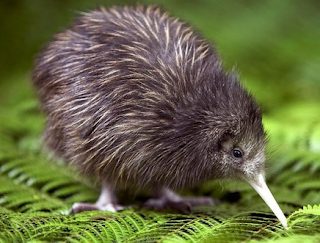
Kiwi (/ˈkiːwi/ KEE-wee)] or kiwis are flightless birds native to New Zealand, in the genus Apteryx and family Apterygidae. Approximately the size of a domestic chicken, kiwi are by far the smallest living ratites (which also consist of ostriches, emus, rheas, and cassowaries), and lay the largest egg in relation to their body size of any species of bird in the world.

DNA sequence comparisons have yielded the surprising conclusion that kiwi are much more closely related to the extinct Malagasy elephant birds than to the moa with which they shared New Zealand.There are five recognised species, four of which are currently listed as vulnerable, and one of which is near-threatened. All species have been negatively affected by historic deforestation but currently the remaining large areas of their forest habitat are well protected in reserves and national parks. At present, the greatest threat to their survival is predation by invasive mammalian predators.

The unique adaptations of kiwi, such as their large eggs, short and stout legs, or using their nostrils at the end of their long beak to detect prey before they ever see it, have helped the bird to become internationally well-known.

The kiwi is an icon of New Zealand, and the association is so strong that the term Kiwi is used internationally as the colloquial demonym for New Zealanders.

Description

Their adaptation to a terrestrial life is extensive: like all the other ratites (ostrich, emu, rhea and cassowary), they have no keel on the sternum to anchor wing muscles. The vestigial wings are so small that they are invisible under the bristly, hair-like, two-branched feathers. While most adult birds have bones with hollow insides to minimise weight and make flight practicable, kiwi have marrow, like mammals and the young of other birds. With no constraints on weight due to flight requirements, brown kiwi females carry and lay a single egg that may weigh as much as 450 g (16 oz). Like most other ratites, they have no uropygial gland (preen gland). Their bill is long, pliable and sensitive to touch, and their eyes have a reduced pecten. Their feathers lack barbules and aftershafts, and they have large vibrissae around the gape. They have 13 flight feathers, no tail and a small pygostyle. Their gizzard is weak and their caecum is long and narrow.

The eye of the kiwi is the smallest relative to body mass in all avian species resulting in the smallest visual field as well. The eye has small specialisations for a nocturnal lifestyle, but kiwi rely more heavily on their other senses (auditory, olfactory, and somatosensory system). The sight of the kiwi is so underdeveloped that blind specimens have been observed in nature, showing how little they rely on sight for survival and foraging. In an experiment, it was observed that one-third of a population of A. rowi in New Zealand under no environmental stress had ocular lesions in one or both eyes. The same experiment examined three specific specimens that showed complete blindness and found them to be in good physical standing outside of ocular abnormalities.

Unlike virtually every other palaeognath, which are generally small-brained by bird standards, kiwi have proportionally large encephalisation quotients. Hemisphere proportions are even similar to those of parrots and songbirds, though there is no evidence of similarly complex behaviour.

Relationship to humans


The Māori traditionally believed that kiwi were under the protection of Tane Mahuta, god of the forest. They were used as food and their feathers were used for kahu kiwi—ceremonial cloaks. Today, while kiwi feathers are still used, they are gathered from birds that die naturally or through road accidents or predation, or from captive birds. Kiwi are no longer hunted and some Maori consider themselves the birds' guardians.
Scientific documentation
In 1813, George Shaw named the genus Apteryx in his species description of the southern brown kiwi, which he called "the southern apteryx". Captain Andrew Barclay of the ship Providence provided Shaw with the specimen. Shaw's description was accompanied by two plates, engraved by Frederick Polydore Nodder; they were published in volume 24 of The Naturalist's Miscellany.

Zoos

In 1851, London Zoo became the first zoo to keep kiwi. The first captive breeding took place in 1945. As of 2007 only 13 zoos outside New Zealand hold kiwi. The Frankfurt Zoo has 12, the Berlin Zoo has seven, Walsrode Bird Park has one, the Avifauna Bird Park in the Netherlands has three, the San Diego Zoo has five, the San Diego Zoo Safari Park has one, the National Zoo in Washington, DC has eleven, the Smithsonian Conservation Biology Institute has one, and the Columbus Zoo and Aquarium has three.

Mango


  • Kingdom               :Plantae
  • Phylum                  :Tracheophyta
  • Class                      :Angiospermae
  • Order                    :Sapindales
  • Family                   :Anacardiaceae
  • Genus                    :Mangifera
  • Scientific Name    :Mangifera indica


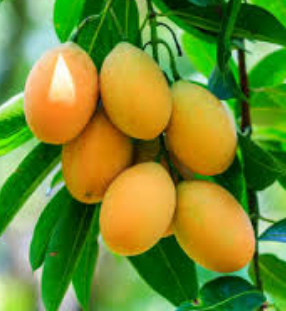
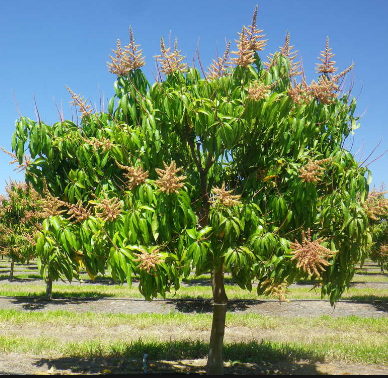
Mangifera indica, commonly known as mango, is a species of flowering plant in the sumac and poison ivy family Anacardiaceae. It is native to the Indian subcontinent where it is indigenous. Hundreds of cultivated varieties have been introduced to other warm regions of the world. It is a large fruit-tree, capable of a growing to a height and crown width of about 100 feet and trunk circumference of more than twelve feet.

The species domestication is attributed to India around 2000 BCE.Mango was brought to East Asia around 400-500 BCE, in the 15th century to the Philippines, and in the 16th century to Africa and Brazil by Portuguese explorers.The species was assessed and first named in botanical nomenclature by Linnaeus in 1753.Mango is the national fruit of India, Pakistan and the Philippines.

Description:

Mango trees grow to 35–40 m (115–131 ft) tall, with a crown radius of 10 m (33 ft). The trees are long-lived, as some specimens still fruit after 300 years.[4] In deep soil, the taproot descends to a depth of 6 m (20 ft), with profuse, wide-spreading feeder roots and anchor roots penetrating deeply into the soil.[1] The leaves are evergreen, alternate, simple, 15–35 cm (5.9–13.8 in) long, and 6–16 cm (2.4–6.3 in) broad; when the leaves are young they are orange-pink, rapidly changing to a dark, glossy red, then dark green as they mature.The flowers are produced in terminal panicles 10–40 cm (3.9–15.7 in) long; each flower is small and white with five petals 5–10 mm (0.20–0.39 in) long, with a mild, sweet fragrance.[1] Over 500 varieties of mangoes are known, many of which ripen in summer, while some give a double crop.The fruit takes four to five months from flowering to ripen.

The ripe fruit varies in size, shape, color, sweetness, and eating quality.Cultivars are variously yellow, orange, red, or green, and carry a single flat, oblong pit that can be fibrous or hairy on the surface, and which does not separate easily from the pulp.The fruits may be somewhat round, oval, or kidney-shaped, ranging from 5–25 centimetres (2–10 in) in length and from 140 grams (5 oz) to 2 kilograms (5 lb) in weight per individual fruit.The skin is leather-like, waxy, smooth, and fragrant, with color ranging from green to yellow, yellow-orange, yellow-red, or blushed with various shades of red, purple, pink or yellow when fully ripe.

Ripe intact mangoes give off a distinctive resinous, sweet smell.[1] Inside the pit 1–2 mm (0.039–0.079 in) thick is a thin lining covering a single seed, 4–7 cm (1.6–2.8 in) long. Mangoes have recalcitrant seeds which do not survive freezing and drying.[6] Mango trees grow readily from seeds, with germination success highest when seeds are obtained from mature fruits.

Production

In 2016, global production of mangoes (report includes mangosteens and guavas) was 46.5 million tonnes, led by India with 40% (19 million tonnes) of the world total.China and Thailand were the next largest producers

Tulip


  • Kingdom    :Plantae
  • Clade          :Angiosperms
  • Clade          :Monocots
  • Order          :Liliales
  • Family        :Liliaceae
  • Tribe           :Lilieae
  • Genus         :Tulipa


Tulips (Tulipa) form a genus of spring-blooming perennial herbaceous bulbiferous geophytes (having bulbs as storage organs). The flowers are usually large, showy and brightly coloured, generally red, yellow, or white. They often have a different coloured blotch at the base of the tepals (petals and sepals, collectively), internally. Because of a degree of variability within the populations, and a long history of cultivation, classification has been complex and controversial. The tulip is a member of the Liliaceae (lily) family, along with 14 other genera, where it is most closely related to Amana, Erythronium and Gagea in the tribe Lilieae. There are about 75 species, and these are divided among four subgenera. The name "tulip" is thought to be derived from a Persian word for turban, which it may have been thought to resemble. Tulips originally were found in a band stretching from Southern Europe to Central Asia, but since the seventeenth century have become widely naturalised and cultivated (see map). In their natural state they are adapted to steppes and mountainous areas with temperate climates. Flowering in the spring, they become dormant in the summer once the flowers and leaves die back, emerging above ground as a shoot from the underground bulb in early spring.

While tulips had probably been cultivated in Asia from the tenth century, they did not come to the attention of the west till the sixteenth century, when western diplomats to the Ottoman court observed and reported on them. They were rapidly introduced into Europe and cultivated and became a frenzied commodity during Tulip mania. Tulips were frequently depicted in Dutch Golden Age paintings, and have become associated with the Netherlands, the major producer for world markets, ever since. In the seventeenth century Netherlands, during the time of the Tulip mania, an infection of tulip bulbs by the tulip breaking virus created variegated patterns in the tulip flowers that were much admired and valued. This phenomenon was referred to as "broken".

Breeding programs have produced thousands of hybrid and cultivates in addition to the original species (known in horticulture as botanical tulips). They are popular throughout the world, both as ornamental garden plants and as cut flowers.

Description 

Tulipa (tulips) is a genus of spring-blooming perennial herbaceous bulbiferous geophytes, dying back after flowering to an underground storage bulb. Depending on the species, tulip plants can be between 4 inches (10 cm) and 28 inches (71 cm) high.

Flowers: The tulip's flowers are usually large and are actinomorphic (radially symmetric) and hermaphrodite (contain both male (androecium) and female (gynoecium) characteristics), generally erect, or more rarely pendulous, and are arranged more usually as a single terminal flower, or when pluriflor as two to three (e.g. Tulipa turkestanica), but up to four, flowers on the end of a floriferous stem (scape), which is single arising from amongst the basal leaf rosette. In structure, the flower is generally cup or star shaped. As with other members of Liliaceae the perianth is undifferentiated (perigonium) and biseriate (two whorled), formed from six free (i.e. apotepalous) caducous tepals arranged into two separate whorls of three parts (trimerous) each. The two whorls represent three petals and three sepals, but are termed tepals because they are nearly identical. The tepals are usually petaloid (petal like), being brightly coloured, but each whorl may be different, or have different coloured blotches at their bases, forming darker colouration on the interior surface. Tulip flowers come in a wide variety of colours, except pure blue (several tulips with "blue" in the name have a faint violet hue), and have absent nectaries.

Distribution and habitat

Tulips are mainly distributed along a band corresponding to Latitude 40o north, from south-east of Europe (Ukraine, Russia) and Turkey in the west, through the Levant (Syria, Israel, Palestinian Territories, Lebanon and Jordan). From there it extends eastwards through Jere van, (Armenia) and Baku (Azerbaijan) and on the eastern shore of the Caspian Sea through Turkmenistan, Bukhara, Samarkand and Tashkent (Uzbekistan), to the eastern end of the range in the Pamir-Alai and Tien-Shan mountains in Central Asia, which form the centre of diversity.Further to the east, Tulipa is found in the western Himalayas, southern Siberia, inner Mongolia, and as far as the northwest of China. While authorities have stated that no tulips west of the Balkans are native, subsequent identification of Tulipa sylvestris subsp. australis as a native of the Iberian peninsula and adjacent North Africa shows that this may be a simplification. In addition to these regions in the west tulips have been identified in Greece, Cyprus and the Balkans. In the south, Iran marks its furthest extent, while the northern limit is the Ukraine.Although tulips are also throughout most of the Mediterranean and Europe, these regions do not form part of the natural distribution. Tulips were brought to Europe by travellers and merchants from Anatolia and Central Asia for cultivation, from where they escaped and naturalised (see map). For instance, less than a half of those species found in Turkey are actually native.These have been referred to as neo-tulipae.

Tulips are indigenous to mountainous areas with temperate climates, where they are a common element of steppe and winter-rain Mediterranean vegetation. They thrive in climates with long, cool springs and dry summers. Tulips are most commonly found in meadows, steppes and chaparral, but also introduced in fields, orchards, roadsides and abandoned gardens.

Subdivision

The genus, which includes about 75 species, is divided into four sub genera.

Clusianae (4 species)
Orithyia (4 species)
Tulipa (52 species)
Eriostemones (16 species)
Etymology
The word tulip, first mentioned in western Europe in or around 1554 and seemingly derived from the "Turkish Letters" of diplomat Ogier Ghiselin de Busbecq, first appeared in English as tulipa or tulipant, entering the language by way of French: tulipe and its obsolete form tulipan or by way of Modern Latin tulīpa, from Ottoman Turkish tülbend ("muslin" or "gauze"), and may be ultimately derived from the Persian: دلبند‎ delband ("Turban"), this name being applied because of a perceived resemblance of the shape of a tulip flower to that of a turban.This may have been due to a translation error in early times, when it was fashionable in the Ottoman Empire to wear tulips on turbans. The translator possibly confused the flower for the turban.

Water Lily


  • Kingdom      :Plantae
  • Clade            :Angiosperms
  • Order            :Nymphaeales
  • Family          :Nymphaeaceae


Nymphaeaceae /ˌnɪmfiːˈeɪsiː/ is a family of flowering plants, commonly called water lilies. They live as rhizomatous aquatic herbs in temperate and tropical climates around the world. The family contains five genera with about 70 known species.Water lilies are rooted in soil in bodies of water, with leaves and flowers floating on or emergent from the surface. The leaves are round, with a radial notch in Nymphaea and Nuphar, but fully circular in Victoria and Euryale.

Water lilies are a well studied clade of plants because their large flowers with multiple unspecialized parts were initially considered to represent the floral pattern of the earliest flowering plants, and later genetic studies confirmed their evolutionary position as basal angiosperms. Analyses of floral morphology and molecular characteristics and comparisons with a sister taxon, the family Cabombaceae, indicate, however, that the flowers of extant water lilies with the most floral parts are more derived than the genera with fewer floral parts. Genera with more floral parts, Nuphar, Nymphaea, Victoria, have a beetle pollination syndrome, while genera with fewer parts are pollinated by flies or bees, or are self- or wind-pollinated.Thus, the large number of relatively unspecialized floral organs in the Nymphaeaceae is not an ancestral condition for the clade.

Water lilies do not have surface leaves during winter, and therefore the gases in the rhizome lacunae access equilibrium with the gases of the sediment water. The leftover of internal pressure is embodied by the constant streams of bubbles that outbreak when rising leaves are ruptured in the spring.

Description:

The Nymphaeaceae are aquatic, rhizomatous herbs. The family is further characterized by scattered vascular bundles in the stems, and frequent presence of latex, usually with distinct, stellate-branched sclereids projecting into the air canals. Hairs are simple, usually producing mucilage (slime). Leaves are alternate and spiral, opposite or occasionally whorled, simple, peltate or nearly so, entire to toothed or dissected, short to long petiolate), with blade submerged, floating or emergent, with palmate to pinnate venation. Stipules are either present or absent. Flowers are solitary, bisexual, radial, with a long pedicel and usually floating or raised above the surface of the water, with girdling vascular bundles in receptacle. Female and male parts of the flower are active at different times usually, to facilitate cross-pollination. Sepals are 4-12, distinct to connate, imbricate, and often petal-like. Petals lacking or 8 to numerous, inconspicuous to showy, often intergrading with stamens. Stamens are 3 to numerous, the innermost sometimes represented by staminodes. Filaments are distinct, free or adnate to petaloid staminodes, slender and well differentiated from anthers to laminar and poorly differentiated from anthers; pollen grains usually monosulcate or lacking apertures. Carpels are 3 to numerous, distinct or connate. Fruit is an aggregate of nuts, a berry, or an irregularly dehiscent fleshy spongy capsule. Seeds are often arillate, more or less lacking sperm.

Taxonomy

Nymphaeaceae has been investigated systematically for decades because botanists considered their floral morphology to represent one of the earliest groups of angiosperms.Modern genetic analyses by the Angiosperm Phylogeny Group researchers has confirmed its basal position among flowering plants.In addition, the Nymphaeaceae are more genetically diverse and geographically dispersed than other basal angiosperms.Nymphaeaceae is placed in the order Nymphaeales, which is the second diverging group of angiosperms after Amborella in the most widely accepted flowering plant classification system, APG IV system.

Nymphaeaceae is a small family of three to six genera: Barclaya, Euryale, Nuphar, Nymphaea, Ondinea, and Victoria. The genus Barclaya is sometimes given rank as its own family, Barclayaceae, on the basis of an extended perianth tube (combined sepals and petals) arising from the top of the ovary and by stamens that are joined in the base. However, molecular phylogenetic work includes it in Nymphaeaceae.The genus Ondinea has recently been shown to be a morphologically aberrant species of Nymphaea, and is now included in this genus.The genera Euryale, of far east Asia, and Victoria, from South America, are closely related despite their geographic distance, but their relationship toward Nymphaea need further studies.

The sacred lotus was once thought to be a water lily, but is now recognized to be a highly modified eudicot in its own family Nelumbonaceae of the order Proteales.

Asian bleeding-heart


  • Kingdom            :Plantae
  • Phylum               :Angiosperms
  • Class                   :Eudicots
  • Order                  :Ranunculales
  • Family                :Papaveraceae
  • Genus                 :Lamprocapnos
  • Scientific Name :Lamprocapnos spectabilis


Lamprocapnos spectabilis (bleeding heart or Asian bleeding-heart) is a species of flowering plant in the poppy family Papaveraceae, native to Siberia, northern China, Korea and Japan. It is the sole species in the monotypic genus Lamprocapnos, but is still widely referenced under its old name Dicentra spectabilis (now listed as a synonym). It is valued in gardens and in floristry for its heart-shaped pink and white flowers, borne in spring.

Other common names include "lyre flower" and "lady-in-a-bath".

Description

The two inner petals are made visible when the two pink outer petals are pulled apart. Their shape yields the common name "lady-in-a-bath".
The Asian bleeding-heart grows to 120 cm (47 in) tall by 45 cm (18 in) wide. It is a rhizomatous herbaceous perennial with 3-lobed compound leaves on fleshy green to pink stems. The arching horizontal racemes of up to 20 pendent flowers are borne in spring and early summer. The outer petals are bright fuchsia-pink, while the inner ones are white. The flowers strikingly resemble the conventional heart shape, with a droplet beneath – hence the common name. The pure white-flowered 'Alba', somewhat more robust than the species, is a popular cultivar. The plant sometimes behaves as a spring ephemeral, going dormant in summer.

Cultivation

In a moist and cool climate, it will grow in full sun, but in warmer and drier climates it requires some shade.

Aphids, slugs and snails sometimes feed on the leaves.

Clumps remain compact for many years and do not need dividing. They have brittle roots which are easily damaged when disturbed. Root cuttings should be taken in spring.

Seeds with whitish elaiosomes are borne in long pods. They must be sown while fresh. Division should be done in the late fall (autumn) or early spring.

Cultivars

Several cultivars have been selected. 'Alba' has white flowers, and 'Gold Heart', introduced from Hadspen Garden, England, in 1997, has yellow leaves.

The species, the cultivar 'Alba' and the red-and-white cultivar 'Valentine' have gained the Royal Horticultural Society's Award of Garden Merit.

American Robin


  • Kingdom              :Animalia
  • Phylum                 :Chordata
  • Class                     :Aves
  • Order                   :Passeriformes
  • Family                  :Turdidae
  • Genus                   :Turdus
  • Scientific Name   :Turdus migratorius

The American robin (Turdus migratorius) is a migratory songbird of the true thrush genus and Turdidae, the wider thrush family. It is named after the European robin because of its reddish-orange breast, though the two species are not closely related, with the European robin belonging to the Old World flycatcher family. The American robin is widely distributed throughout North America, wintering from southern Canada to central Mexico and along the Pacific Coast. It is the state bird of Connecticut, Michigan, and Wisconsin.According to some sources, the American robin ranks behind only the red-winged blackbird (and just ahead of the introduced European starling and the not-always-naturally-occurring house finch) as the most abundant extant land bird in North America.It has seven subspecies, but only T. m. confinis of Baja California Sur is particularly distinctive, with pale gray-brown underparts.

Behaviour:

The American robin is active mostly during the day and assembles in large flocks at night. Its diet consists of invertebrates (such as beetle grubs, earthworms, and caterpillars), fruits, and berries. It is one of the earliest bird species to lay eggs, beginning to breed shortly after returning to its summer range from its winter range. Its nest consists of long coarse grass, twigs, paper, and feathers, and is smeared with mud and often cushioned with grass or other soft materials. It is one of the first birds to sing at dawn, and its song consists of several discrete units that are repeated.

Diet:

The American robin's diet generally consists of around 40 percent small invertebrates (mainly insects), such as earthworms, beetle grubs, caterpillars and grasshoppers, and 60 percent wild and cultivated fruits and berries.Their ability to switch to berries allows them to winter much farther north than most other North American thrushes. They will flock to fermented Pyracantha berries, and after eating sufficient quantities will exhibit intoxicated behaviour such as falling over while walking. Robins forage primarily on the ground for soft-bodied invertebrates, and find worms by sight (and sometimes by hearing), pouncing on them and then pulling them up.Nestlings are fed mainly on worms and other soft-bodied animal prey. In some areas, robins, particularly of the coastal race T. m. caurinus, will feed on beaches, taking insects and small mollusks.

The robin uses auditory, visual, olfactory and possibly vibrotactile cues to find prey, but vision is the predominant mode of prey detection.It is frequently seen running across lawns picking up earthworms, and its running and stopping behaviour is a distinguishing characteristic. In addition to hunting visually, it also has the ability to hunt by hearing. Experiments have discovered that it can find worms underground by simply using its listening skills.It typically will take several short hops and then cock its head left, right or forward to detect movement of its prey. In urban areas, robins will gather in numbers soon after lawns are mowed or where sprinklers are in use.They also are attracted to freshly turned earth in gardens, where worms and grubs are abundant targets. Occasionally, they may visit bird feeders if meal worms or animal-fat suet is offered.

Alpine Ibex


  • Kingdom               :Animalia
  • Phylum                 :Chordata
  • Class                      :Mammalia
  • Order                    :Artiodactyla
  • Family                   :Bovidae
  • Subfamily             :Caprinae
  • Genus                    :Capra
  • Scientific Name    :Capra ibex


The Alpine ibex (Capra ibex), also known as the steinbock, bouquetin, or simply ibex, is a species of wild goat that lives in the mountains of the European Alps. It is a sexually dimorphic species with larger males who carry larger, curved horns. The coat colour is typically brownish grey. Alpine ibex tend to live in steep, rough terrain near the snow line. They are also social, although adult males and females segregate for most of the year, coming together only to mate. Four distinct groups exist; adult male groups, female-offspring groups, groups of young individuals, and mixed sex groups.

During the breeding season, males fight for access to females and use their long horns in agnostic behaviours. After being extirpated from most areas by the 19th century, the Alpine ibex was successfully reintroduced to parts of its historical range. All individuals living today descend from the stock in Gran Paradiso National Park in Aosta Valley and from the neighbouring valley of Maurienne, now part of the Vanoise National Park linked to the former. These two national parks are connected and have been specially created to help the ibex to thrive. The ibex is the emblem of both the Gran Paradiso National Park and the Vanoise National Park. The species is currently listed as of least concern by the IUCN, but went through a population bottleneck and therefore has low genetic diversity.

Appearance

Compared with other members of its genus, the Alpine ibex has a short, broad head and a duller coat. It has brownish grey hair over most of the body, a pale abdomen and slightly darker markings on the chin and throat and in a stripe along the back. They moult twice a year, firstly in April or May, and then again in September, when they replace the short summer coat with thicker hair and a woolly undercoat.

Males commonly grow to a height of 90 to 101 centimetres (35 to 40 in) at the withers, with a body length of 149 to 171 centimetres (59 to 67 in) and weigh from 67 to 117 kilo grams (148 to 258 lb). Females are noticeably smaller, with a shoulder height of 73 to 84 centimetres (29 to 33 in), a body length of 121 to 141 centimetres (48 to 56 in), and a weight of 17 to 32 kilo grams (37 to 71 lb). Both male and female Alpine ibexes have large, backwards-curving, horns with numerous ridges along their length. At 69 to 98 centimetres (27 to 39 in), those of the males are substantially larger than those of females, which reach only 18 to 35 centimetres (7.1 to 13.8 in) in length.

Distribution and ecology:

The Alpine ibex was, at one point, restricted only to the Gran Paradiso National Park in northern Italy, and in the Maurienne Valley in the French Alps but in recent years it was both reintroduced to and recolonised most of the European Alps. It is now found in most or all the Italian and French alpine ranges, southern Germany, Switzerland and Austria. It was also introduced to Bulgaria and Slovenia.

An excellent climber, its preferred habitat is the rocky region along the snow line above alpine forests, where it occupies steep, rough terrain at elevations of 1,800 to 3,300 metres (5,900 to 10,800 ft). Alpine ibex are typically absent from woodland areas although adult males in densely populated areas may stay in larch and mixed larch-spruce woodland if there is no snow.Males spend the winter in coniferous forests.For most of the year, males and females occupy different habitat. Females rely on steep terrain more so than males.Males use lowland meadows during the spring, which is when snow melts and green grass appears.They then climb to alpine meadows during the summer. When winter arrives, both sexes move to steep rocky slopes that amass little snow.They prefer slopes of 30–45° and use small caves and overhangs for shelter.Home ranges are highly variable, depending on the availability of resources, and vary in size throughout the year. Figures of anything from 180 to 2,800 hectares (0.69 to 10.81 sq mi; 1.8 to 28.0 km2) have been recorded.Home ranges tend to be largest during summer and autumn, smallest in winter and intermediate in spring.Female home ranges are usually smaller than those of males. Alpine ibexes appear to have a low rate of predation and in Gran Paradiso typically die of age, starvation or disease.

Nilgai


  • Kingdom                :Animalia
  • Phylum                   :Chordata
  • Class                       :Mammalia
  • Order                      :Artiodactyla
  • Family                    :Bovidae
  • Subfamily               :Bovinae
  • Scientific Name      :Boselaphus tragocamelus

Description:

The nilgai is the largest antelope in Asia.It stands 1–1.5 metres (3.3–4.9 ft) at the shoulder; the head-and-body length is typically between 1.7–2.1 metres (5.6–6.9 ft).[6] Males weigh 109–288 kilograms (240–635 lb); the maximum weight recorded is 308 kilograms (679 lb). Females are lighter, weighing 100–213 kilograms (220–470 lb).Sexual dimorphism is prominent; the males are larger than females and differ in colouration.

A sturdy thin-legged antelope, the nilgai is characterised by a sloping back, a deep neck with a white patch on the throat, a short mane of hair behind and along the back ending behind the shoulder, and around two white spots each on its face, ears, cheeks, lips and chin.The ears, tipped with black, are 15–18 centimetres (5.9–7.1 in) long.[2] A column of coarse hair, known as the "pendant" and around 13 centimetres (5.1 in) long in males, can be observed along the dewlap ridge below the white throat patch.The tufted tail, up to 54 centimetres (21 in), has a few white spots and is tipped with black.[6] The forelegs are generally longer, and the legs are often marked with white "socks".

While females and juveniles are orange to tawny, males are much darker – their coat is typically bluish grey. The ventral parts, the insides of the thighs and the tail are all white.A white stripe extends from the underbelly and broadens as it approaches the rump, forming a patch lined with dark hair.Almost white, though not albino, individuals have been observed in the Sariska National Park (Rajasthan, India) while individuals with white patches have been recorded at zoos.The hairs, typically 23–28 centimetres (9.1–11.0 in) long, are fragile and brittle.Males have thicker skin on their head and neck that protect them in fights.The coat is not well-insulated with fat during winter, and consequently severe cold might be fatal for the nilgai.
Only males possess horns, though a few females may be horned as well. The horns are 15–24 centimetres (5.9–9.4 in) long but generally shorter than 30 centimetres (12 in).Smooth and straight, these may point backward or forward.The horns of the nilgai and the four-horned antelope lack the ringed structure typical of those of other bovids.

The maximum recorded length of the skull is 376 millimetres (14.8 in). The milk teeth are totally lost and the permanent dentition completed by three years of age. The permanent teeth get degraded with age, showing prominent signs of wear at six years of age. The nilgai has sharp ears and eyes, though its sense of smell is not as acute.

Ecology and behavior:

The nilgai is diurnal (active mainly during the day). A 1991 study investigated the daily routine of the antelope and found feeding peaks at dawn, in the morning, in the afternoon and during the evening.Females and juveniles do not interact appreciably with males, except during the mating season. Groups are generally small, with ten or fewer individuals, though groups of 20 to 70 individuals can occur at times.In a 1980 study in the Bardiya National Park (Nepal), the average herd size was of three individuals;In a 1995 study in the Gir National Park (Gujarat, India), herd membership varied with season.However, three distinct groupings are formed: one or two females with young calves, three to six adult and yearling females with calves, and male groups with two to 18 members.
Typically tame, the nilgai may appear timid and cautious if harassed or alarmed; instead of seeking cover like duikers it would flee up to 300 metres (980 ft)-or even 700 metres (2,300 ft) on galloping-away from the danger.Though generally quiet, nilgai have been reported to make short guttural grunts when alarmed, and females to make clicking noises when nursing young.Alarmed individuals, mainly juveniles below five months, give out a coughing roar (whose pitch is highest in case of the juveniles) that lasts half a second, but can be heard by herds less than 500 metres (1,600 ft) away and responded to similarly.

Fights take place in both sexes and involve pushing their necks against each other or ramming into one another using horns. Fights can be gory; despite the protective skin deep, lacerated wounds and even deaths might occur.Display behaviour focuses on the throat patch and the beard, and threatening opponents by pointing the horns toward them. A young male was observed making a submissive display in the Sariska Reserve by kneeling before an adult male, who stood erect.The nilgai mark their territories by forming dung piles as much as 50 centimetres (20 in) in radius. The defecation process is elaborate-the antelope stands with his legs about a metre apart, with the rump lowered and the tail held almost vertical; it stays in the same posture for at least ten seconds after relieving itself. The process is not as elaborate in the females as it is in the males.
In India, the nilgai shares its habitat with the four-horned antelope, chinkara, chital and blackbuck; its association with the gaur and the water buffalo is less common.In the Ranthambore National Park (Rajasthan, India) the nilgai and the chinkara collectively prefer the area rich in Acacia and Butea species, while the sambar deer and the chital preferred the forests of Anogeissus and Grewia species.In India, the Indian tiger and the lion may prey on the nilgai but they are not significant predators of this antelope.Leopards prey on the nilgai, though they prefer smaller prey.Dholes generally attack juveniles.Other predators include wolves and striped hyenas.

Diet:

Herbivores, the nilgai prefer grasses and herbs; woody plants are commonly eaten in the dry tropical forests of India. Studies suggest they may be browsers or mixed feeders in India, whereas they are primarily grazers in Texas.The nilgai can tolerate interference by livestock and degradation of vegetation in its habitat better than deer, possibly because they can reach high branches and do not depend on surface vegetation.The sambar deer and nilgai in Nepal have similar dietary preferences.Diets generally suffice in protein and fats.The protein content of the nilgai's should be at least seven percent.The nilgai can survive for long periods without water and do not drink regularly even in summer.However, a nilgai died in Dwarka (India) allegedly due to the heat wave and acute shortage of water.

A 1994 study of the nilgai's diet in the Sariska Reserve revealed its preference for herbs and grasses; grasses became more important in the rainy season, while during winter and summer it fed additionally on flowers (Butea monosperma), foliage (Anogeissus pendula, Capparis sepiaria, Grewia flavescens and Zizyphus mauritiana), pods (Acacia nilotica, A. catechu and A. leucophloea) and fruits (Zizyphus mauritiana).Preferred grass species include Cenchrus species, Cynodon dactylon, Desmostachya bipinnata, Scirpus tuberosus and Vetiveria zizanoides. Woody plants eaten include Acacia nilotica, A. senegal, A. leucophloea, Clerodendrum phlomidis, Crotalaria burhia, Indigofera oblongifolia, Morus alba and Zizyphus nummularia; herbs favoured are Cocculus hirsutus, Euphorbia hirta and Sida rhombifolia.Seeds of Paspalum distichum occurred in the dung of nilgai most of the year; Acacia nilotica and Prosopis juliflora seeds were discovered in the dry season and those of Echinochloa crusgalli during the monsoon.

Habitat and Distribution:

Nilgai prefer areas with short bushes and scattered trees in scrub forests and grassy plains. They are common in agricultural lands, but hardly occur in dense woods. In southern Texas, it roams in the prairies, scrub forests and oak forests. It is a generalist animal-it can adapt to a variety of habitats.Though sedentary and less dependent on water, nilgai may desert their territories if all water sources in and around it dry up.Territories in Texas are 0.6 to 8.1 square kilometres (0.23 to 3.13 sq mi) large.
This antelope is endemic to the Indian subcontinent: major populations occur in India, Nepal and Pakistan, whereas it is extinct in Bangladesh. Significant numbers occur in the Terai lowlands in the foothills of the Himalayas; the antelope is abundant across northern India.[59] The Indian population was estimated at one million in 2001.The nilgai were first introduced to Texas in the 1920s and the 1930s in a 6,000 acres (2,400 ha) large ranch near the Norias Division of the King Ranch, one of the largest ranches in the world. The feral population saw a spurt toward the latter part of the 1940s, and gradually spread out to adjoining ranches.
Nilgai search for new areas if they run out of water.
Population densities show great geographical variation across India. Density can be as low as 0.23 to 0.34 individuals per km2 in the Indravati National Park (Chhattisgarh) and 0.4 individuals per km2 in the Pench Tiger Reserve (Madhya Pradesh) or as high as 6.60 to 11.36 individuals per km2 and Ranthambhore National Park and 7 individuals per km2 in Keoladeo National Park (both in Rajasthan).Seasonal variations were noted in the Bardiya National Park (Nepal) in a 1980 study; the density 3.2 individuals per km2 during the dry season and 5 per km2 in April (the start of the dry season).[40] In southern Texas, densities were found to be nearly 3–5 individuals per km2 in 1976.
I believe that the Coimbatore and Salem collectorates are almost the only places in Southern India, in which nil-gai are to be found. It is difficult to account for the animals being thus so widely divided from their usual haunts unless as has been generally supposed, these Southern specimens are the progeny of a semi-domesticated herd, which, at some by-gone period, had escaped from the preserve of a native potentate.

Reproduction:

Observations of females in southern Texas revealed that ovaries are developed by two years of age and the first birth takes place typically a year later, though in a few cases females as young as one-and-a-half years may mate successfully.Females can breed again around a year after parturition.Males in the same location were found to have active testes by the age of three years, that matured considerably by the next year.Males become sexually active at four or five years. Mating may occur throughout the year, with peaks of three to four months. The time of the year when these peaks occur varies geographically. In Texas, a peak is apparent from December to March.In Bharatpur National Park (Rajasthan, India) the breeding season is from October to February, peaking in November and December. The Sariska reserve witnesses a similar peak in December and January.

In the mating season, rutting males move about in search of females in oestrus.Males become aggressive and fight among themselves for dominance. These fights are characterised by displays of the enlarged chest, the throat patch and the beard while holding the head upright; and threatening the opponent by running with the horns pointed toward him and circling him.The victorious bull would protect the vicinity of the targeted female from other males. The courtship typically lasts for 45 minutes. The male, stiff and composed, approaches the receptive female, who keeps her head low to the ground and may slowly walk forward. The male licks her genitalia, upon which the female holds her tail to a side and the male gives out a flehmen response. Finally, the male pushes his chest against her rump, and mounts her.

Gestation lasts eight to nine months, following which a single calf or twins (even triplets at times) are born. In a 2004 study in the Sariska reserve, twins accounted for as high as 80 percent of the total calf population.[42] Births peak from June to October in the Bharatpur National Park, and from April to August in southern Texas. Calves are precocial; they are able to stand within 40 minutes of birth, and forage by the fourth week.Pregnant females isolate themselves before giving birth. As typical of several bovid species, nilgai calves are kept in hiding for the first few weeks of their lives. This period of concealment can last as long as a month in Texas.Calves, mainly males, bicker playfully by neck-fighting.Young males would leave their mothers at ten months to join bachelor groups.The lifespan of the nilgai is typically ten years in Texas.

Black Buck


  • Kingdom                  :Animalia
  • Phylum                     :Chordata
  • Class                         :Mammalia
  • Order                       :Artiodactyla
  • Family                      :Bovidae
  • Genus                       :Antilope
  • Scientific Name       :Antilope cervicapra

Characteristics:

The blackbuck (Antilope cervicapra), also known as the Indian antelope, is an antelope found in India, Nepal and Pakistan. The blackbuck is the sole extant member of the genus Antilope. The species was described and given its binomial name by Swedish zoologist Carl Linnaeus in 1758. Two subspecies are recognized. It stands up to 74 to 84 cm (29 to 33 in) high at the shoulder. Males weigh 20–57 kilograms (44–126 lb), an average of 38 kilograms (84 lb). Females are lighter, weighing 20–33 kilograms (44–73 lb) or 27 kilograms (60 lb) on an average. The long, ringed horns, 35–75 centimetres (14–30 in) long, are generally present only on males, though females may develop horns as well. The white fur on the chin and around the eyes is in sharp contrast with the black stripes on the face. The coat of males shows two-tone colouration: while the upper parts and outsides of the legs are dark brown to black, the underparts and the insides of the legs are all white. On the other hand, females and juveniles are yellowish fawn to tan.

The blackbuck is a diurnal antelope (active mainly during the day). Three kinds of groups, typically small, are the female, male and bachelor herds. Males often adopt lekking as a strategy to garner females for mating. While other males are not allowed into these territories, females often visit these places to forage. The male can thus attempt mating with her. Herbivores, blackbuck graze on low grasses, occasionally browsing as well. Females become sexually mature at eight months, but mate no earlier than two years. Males mature later, at one-and-a-half years. Mating takes place throughout the year. Gestation is typically six months long, after which a single calf is born. The lifespan is typically 10 to 15 years.

Distribution and Habitat:

Blackbuck is native to the Indian subcontinent, but extinct in Bangladesh.In Nepal, the last surviving population of blackbuck inhabits the Blackbuck Conservation Area south of the Bardia National Park. In 2008, the population was estimated at 184.In Pakistan, blackbuck occasionally occur along the border with India and a captive population is maintained in the Lal Suhanra National Park.

Blackbuck inhabits grassy plains and thinly forested areas where perennial water sources are available for its daily need to drink. Herds travel long distances to obtain water.Scrublands are a good source of forage and cover. Cold climates do not suit the blackbuck.

A few blackbucks are present in the Indian Institute of Technology Madras campus, which is adjacent to Guindy National Park.The albino males were an attraction to the campus. Their numbers are diminishing due to habitat loss and attack by the increased number of stray dogs.

The British naturalist William Thomas Blanford described the range of the blackbuck in his 1891 The Fauna of British India, including Ceylon and Burma as:
India from the base of the Himalayas to the neighbourhood of Cape Comorin (the southernmost locality known to me is Point Calimere), and from the Punjab to Lower Assam, in open plains, not in Ceylon nor east of the Bay of Bengal. Not found on hills nor in thickly wooded tracts, and wanting throughout the Malabar coast south of the neighbourhood of Surat. The statement that this antelope is not found in Lower Bengal is not quite correct ; none are found in the swampy Gangetic delta, but many exist on the plains near the coast in Midnapore (I have shot them near Contai), as they also do in Orissa. Antelopes are most abundant in the North-west Provinces, Rajputana, and parts of the Deccan, but are locally distributed and keep to particular tracts.

Today, only small, scattered herds are seen that are largely confined to protected areas.

The antelope was introduced in Texas in the Edwards Plateau in 1932. By 1988, the population had increased and the antelope was the most populous exotic animal in Texas after the chital.As of early 2000s, the population in the United States has been estimated at 35,000. Blackbuck have been introduced into Argentina, numbering about 8,600 individuals (as of the early 2000s)

Diet:

Being herbivores, blackbuck graze on low grasses, occasionally browsing as well. They prefer sedges, fall witchgrass, mesquite, and live oak. They have occasionally been observed browsing on acacia trees in the Cholistan Desert.Oats and berseem were found to be palatable and nutritious to captive populations in a study.A study in the Velavadar Black Buck Sanctuary (Gujarat, India) showed that Dichanthium annulatum comprised 35 percent of their diet. Digestion of nutrients, especially crude proteins, was poor in summer, but more efficient in the rainy and winter seasons. Consequently crude protein intake in summer was very low, even below the recommended value. Blackbuck had a lower food consumption in summer. The fruits of Prosopis juliflora are often eaten, and blackbuck may play a role in their dispersal.Prosopis becomes a significant food item if grasses are scarce.Water is a daily requirement of the blackbuck.

Reproduction:

Females become sexually mature at eight months, but mate no earlier than two years. Males mature later, at one-and-a-half years. Mating takes place throughout the year; peaks occur during spring and fall in Texas.Two peaks have been observed in India: from August to October and from March to April.Rutting males aggressively establish and defend their territories from other males, giving out loud grunts and engaging in serious head-to-head fights, pushing each other using horns.Aggressive display consists of thrusting the neck forward and raising it, folding the ears and raising the tail. The dominant male pursues the female with his nose pointing upward, smells her urine and shows a flehmen response. The female shows her receptivity by waving her tail and thumping the hindlegs on the ground. This is followed by several mounting attempts, and copulation. The whole process may last as long as six hours. The female will remain still for some time after copulation, following which she may start grazing. The male may then move on to mate with another female.

Gestation is typically six months long, after which a single calf is born.Newborn are a light yellow; infant males may have a black patch on the head and the neck.Young are precocial - they can stand on their own soon after birth.Females can mate again after a month of parturition.Juveniles remain active and playful throughout the day. Juvenile males turn black gradually, darkening notably after the third year.The lifespan is typically 10 to 15 years.

Fishing Cat


Fishing Cat Classification and Evolution:

The Fishing Cat is a small to medium sized feline that is natively found throughout a number of countries in south-east Asia. Unlike other cat species found around the world (with the notable exception of the Jaguar) the Fishing Cat spends most of its life in areas of dense vegetation close to water and is an excellent swimmer. However, despite its water-loving lifestyle, the Fishing Cat is not particularly specially adapted to its semi-aquatic lifestyle with small teeth that are not well designed for holding onto slippery prey and only slight webbing between the toes on its front paws to help it to negotiate the slippery banks. Although the Fishing Cat is known to still be locally common in certain areas, the global population is severely under threat as it is thought that nearly 50% of their specific wetland habitats are under threat from increasing levels of Human activity throughout much of its natural range.

Fishing Cat Anatomy and Appearance:

The Fishing Cat has a stocky and powerful body that is quite long in comparison to its short legs. Their short and coarse coat of fur is olive-grey in colour and patterned with solid black spots that run the length of its body and often turn into black lines along the spine. The Fishing Cat has a short and flattened tail that is marked with black rings and can be used by the animal when swimming as it works in a similar way to a rudder on a boat, steering the Fishing Cat in the right direction through the water. Their small feet are slightly webbed but not any more so than many other feline species, but one of the biggest differences between the Fishing Cat and its relatives is that their claws are not fully retractable with the tips still sticking out slightly from the protective sheath of skin on their toes (most felines are able to completely retract their claws to prevent them from becoming blunt when they are not in use). Fishing Cats have quite broad heads in relation to their body with small, rounded ears that are black on the back and have a distinctive white spot in the centre.

Fishing Cat Distribution and Habitat:

The Fishing Cat is natively found throughout a number of countries in south-east Asia including Bangladesh, Bhutan, Brunei, Cambodia, China, India, Laos, Malaysia, Myanmar, Nepal, Pakistan, Sri Lanka, Thailand and Vietnam along with the Indonesian Islands of Java and Sumatra. Although the Fishing Cat appears to have a wide geographical range, due to the fact that they prefer dense, wetland habitats they are only found in certain regions throughout these countries. Ideally, the Fishing Cat inhabits wetland areas where there is plenty of dense vegetation to provide cover both from predators but also to hide from potential prey, and can be found in a variety of aquatic regions that include mangrove swamps, rivers, lakes, marshes, reed beds and areas of forest close to streams. They are however, severely threatened throughout much of their natural range as wetlands are drained for agriculture or often polluted by industry in the area. It is thought that 98% of the globally significant wetlands throughout south-east Asia are under threat and could even disappear completely.

Fishing Cat Behaviour and Lifestyle:

The Fishing Cat is a nocturnal and solitary hunter that rests amongst dense vegetation during the day before heading to the water at night to find food. They are incredibly strong and capable swimmers and have been known to swim vast distances often in pursuit of a fish trying to get away. Fishing Cats are largely territorial animals that occupy home ranges of up to 22 square kilometres (although the range of a female is often much less), with that of a male Fishing Cat overlapping the patches occupied by a number of females in the area. Fishing Cats are known to be relatively adaptable animals and in certain areas are even known to live around city suburbs with little vegetation and close to Human settlements. Their incredibly elusive and nocturnal lifestyle means that they are often hard to spot but are susceptible to being trapped, poisoned or accidentally caught in snares that are set-up to catch other forest animals, such as Deer.

Fishing Cat Reproduction and Life Cycles:

Although little is really known about their breeding or social behaviour in the wild, mating is thought to take place in January and February when a female Fishing Cat will call to males in the area, indicating that she is ready to mate. After a gestation period that lasts for between 60 and 70 days, she gives birth to 1 - 4 kittens that weigh about 150 grams and are born blind. Fishing Cat kittens develop relatively slowly at first putting on an average of 11 grams in weight a day and don't open their eyes until they are just over two weeks old. At around 50 days old the kittens are able to start eating meat but are not weaned for at least another couple of months. Fishing Cats reach their adult size and are able to breed by the time they are nine months old and become completely independent of their mother about a month later when they leave to establish a territory of their own. Although it is thought that it is just the female who rears her young in the wild, captive males have been observed helping her to raise their offspring.

Fishing Cat Diet and Prey:

The Fishing Cat is a carnivorous animal that only hunts and consumes other animals in order to acquire all of the nutrients that it needs to survive. As its name suggests, aquatic animals make up the bulk of the Fishing Cat's diet with more than 70% of the food thought to be fish, followed by molluscs, frogs, snails and snakes that are found in or close to the water. Fishing Cats are also known to hunt small mammals such as mice on land and will even target larger prey like civets, dogs and livestock in areas close to settlements. Fishing Cats catch their prey in a couple of different ways but tend to dive into the water once a fish has been spotted before catching it in its mouth (they are even known to dive into quite deep water and can surface under aquatic birds to catch them). The other method they use involves them sitting at the water's edge either on the bank or a rock and using their paw, they lightly tap the surface in a way that mimics an insect to attract fish. Once it is close enough the Fishing Cat then scoops the fish out of the water using its paw and flicks it onto dry land before eating it.

Fishing Cat Predators and Threats:

Due to the powerful build and aquatic nature of the Fishing Cat they are thought to have very few (if any) real natural predators in the wild. However, the Fishing Cat is often found in areas where they share their habitats with larger carnivorous mammals such as tigers and bears which could be of threat to them. People are the biggest threat to the Fishing Cat as they have not only destroyed much of their unique wetland homes with increasing levels of industrial and commercial activity but they have also been known to hunt Fishing Cats over the years for their meat and fur. Despite now being a protected animal species, large seizures of Fishing Cat skins at local markets still occur which indicates that poachers are still decimating populations, particularly in certain areas. Another problem for Fishing Cats caused by Humans is the fact that in areas close to growing settlements, locals are often overfishing in the nearby lakes and rivers which means that the food available for the Fishing Cats is also declining fast.

Fishing Cat Interesting Facts and Features:

The Fishing Cat was first described scientifically by Bennet in 1833 and was given its scientific name with the last past meaning "civet-like". Although they are not closely related at all, the Fishing Cat has a long, stocky body with short legs and a short tail which makes it look remarkably similar to these small carnivores. Although Fishing Cats tend to be most commonly found in a variety of watery lowland habitats, they are also known to inhabit areas at elevations of up to 5,000 ft depending on the waterways in the area (a small population is actually found in parts of the Himalayas). The Fishing Cat is classed as part of the Leopard Cat lineage which means that its ancestors would have evolved around 6 million years ago. Other members of this feline group include the Leopard Cat itself, the Pallas Cat and the Flat-Headed Cat, to which the Fishing Cat is most closely related.

Fishing Cat Relationship with Humans:

Due to the fact that the Fishing Cat is seldom seen in the wild as they are nocturnal and their preferred habitats would have been quite inaccessible to people for some time, until the middle of the last century they were locally common throughout much of their native regions. However, the hunting of them by people for their meat and fur has obliterated populations in many areas and even today, they are still illegally killed in their hundreds to sell their skins onto the black market. The biggest problem facing the Fishing Cat though, is the drastically increasing levels of Human activity in their natural environments that is severely affecting not just the Fishing Cats, but also the incredibly unique and bio-diverse wetland habitats in which they live. Water draining for agriculture and to make way for roads, growing Human settlements and high levels of industry that pollutes the water with toxic substances has reduced their once vast natural range by nearly 50%.

Fishing Cat Conservation Status and Life Today:

Today, the Fishing Cat is listed by the IUCN as an animal species that is Endangered in its natural environment and could therefore be threatened with extinction in the not too distant future. The biggest threat to the Fishing Cat is habitat loss with many of their remaining pockets of wetland homes now considered to be protected areas (illegal activity in these areas though is still contributing to the loss of species in these regions). Conservation projects have been set up in a number of areas to protect both the Fishing Cats and their unique wetland habitats and the hunting and trade in the species is now illegal. Poaching however, still continues with skins still being seized from markets in the far east.

Snapping Turtle

Common Snapping Turtle


Alligator Snapping Turtle


  • Kingdom                :Animalia
  • Phylum                   :Chordata
  • Class                       :Reptilia
  • Order                      :Testudines
  • Suborder                 :Cryptodira
  • Family                    :Chelydridae
  • Genus                     :Chelydra
  • Scientific Name     :Chelydra serpentina           (Common Snapping Turtle)
  •                                 :Macrochelys temminckii    (Alligator Snapping Turtle)


Snapping turtles are large aquatic freshwater reptiles that only live in North America. There are only two species of snapping turtle that still exist, which are the Common Snapping Turtle and the Alligator Snapping Turtle. The Common Snapping Turtle tends to live at higher latitudes than the Alligator.
Snapping turtles enjoy a wide variety of food and are often considered the top predator in their environment. The alligator snapping turtle's diet consists mainly of fish, which they lure using a pink worm-like appendage on the end of their tongue. Common snapping turtles are more active hunters and will eat just about anything.

Snapping turtles do not make good pets, usually, as they will never stop growing. The largest snapping turtles on record have weight records of around 600 lbs. Alligator snapping turtles have been known to grow even larger.

The Snapping turtle's main defence mechanism is their powerful snapping jaws, which enable them to make short work of attackers and small prey. They also have monstrous, thick claws on their front and back legs which they use to tear apart food and to climb hills each year where they lay their eggs (in a similar way to sea turtles).

The alligator snapping turtle is the largest freshwater turtle in North America, where it is generally found in the more southern waters of the United States. The smaller and more aggressive common snapping turtle inhabits lakes and streams from South America to Canada.

Snapping turtles spend nearly all of their lives in water, with typically only nesting females actually venturing onto open land. Snapping turtles can remain submerged underwater for up to three hours at a time.

Alligator snapping turtles and common snapping turtles have a very different looking appearances. The alligator snapping turtle has a long head and almost spiky shell, where the common snapping turtle has a more rounded head and a smoother shell. They are also easily distinguished by size as the common snapping turtle is smaller than the alligator snapping turtle.

Snapping turtle mating takes place once a year generally in the spring time. The female snapping turtle can lay anywhere from 10 to 50 eggs which take 3 or 4 months to hatch. It is thought that snapping turtles are capable of living until they are 150 years old but they typically live until they are between 20 and 50 years old in captivity.

Leopard Tortoise


  • Kingdom                   :Animalia
  • Phylum                      :Chordata
  • Class                          :Reptilia
  • Order                         :Testudines
  • Family                       :Testudinidae
  • Genus                        :Geochelone
  • Scientific Name        :Geochelone Pardalis


The leopard tortoise is a large species of tortoise found throughout the African savannas. The leopard tortoise is the forth largest species of tortoise in the world, and is also the most widely distributed tortoise species in Southern Africa.
The leopard tortoise has a wide distribution in sub-Saharan Africa from Sudan to the Cape. As a grazing species of tortoise, the leopard tortoise is most commonly found in semi-arid areas including shrub land and grasslands.

The leopard tortoise is one of the world's largest tortoise species as they can grow to 70 cm in length and weigh about as much as a small person. As with other tortoise species, the leopard tortoise has a large shell which protects it's softer body. The limbs of the leopard tortoise are able to retract back into the leopard tortoise's shell so that no body part is left vulnerable.

The leopard tortoise is a generally solitary animal that spends the majority of it's time grazing on plants, which it can do effectively using it's sharp beak-like mouth. As with other tortoise species, the leopard tortoise is a long-lived animal species, often reaching 100 years old or even more.

The leopard tortoise is a herbivorous animal meaning that it only eats plants and plant material in order to sustain itself. The leopard tortoise primarily grazes on grasses, leaves, berries and flowers along with fruits such as the prickly pear.

Due to it's fairly large size, the leopard tortoise has few natural predators within it's African habitats as many simply cannot penetrate the leopard tortoise's high-domed shell. Humans are the primary predators of the leopard tortoise along with the occasional wild cats and dogs.

Leopard tortoises are not able to reproduce until they are at least 10 years old (known as reaching sexual maturity). As with other tortoise and even reptile species, the female leopard tortoise lays her clutch of up to 18 eggs into a burrow in the ground, which is quickly covered to protect her young from hungry passers-by.

Although there are thriving populations of leopard tortoises in more remote areas, when they are close to humans, the leopard tortoise populations are generally suffering, something which is primarily due to over-hunting by humans.

Galapagos Tortoise


  • Kingdom                     :Animalia
  • Phylum                       :Chordata
  • Class                           :Reptilia
  • Order                          :Testudines
  • Family                        :Testudinidae
  • Genus                         :Geochelone
  • Scientific Name         :Geochelone Nigra


The Galapagos tortoise (giant Galapagos tortoise) was first documented by Charles Darwin last century when he went on his trip to the Galapagos islands.
The Galapagos Tortoise is the biggest species of tortoise in the modern world with some Galapagos tortoises reaching more than 4ft long! The Galapagos tortoise is also one the longest living species of tortoise with a number of Galapagos tortoises getting older than 150!

The Galapagos tortoise, like most other species of tortoise, is a herbivore spending its time grazing on grass and low trees. Today only 10 out of the 12 Galapagos tortoise species still exist on the Pacific islands due to the introduction of goats a few hundred years ago.

The domestic goat, stripped the islands of their good foliage meaning that the Galapagos tortoise found it hard to find food. Today the Galapagos tortoise is most well known for their long necks, which make them look slightly like a dinosaur!

The Galapagos tortoise is a very quiet, peaceful and lazy animal with the Galapagos tortoise waking up early in the morning to bask in the sun until the enormous body of the Galapagos tortoise has warmed up. The Galapagos tortoise then spends the rest of its day foraging for food before retiring back to bed in the early hours of the evening where the Galapagos tortoise spends the night in shrub land or submerged in water.

The Galapagos tortoise is a very slow moving animal with the Galapagos tortoise having a top speed of less than 1 mile an hour! During the mating season however, the male Galapagos tortoises have been known to move at a surprising speed with marked individual Galapagos tortoises having been known to travel 13 km in just two days, a phenomenal feet for the sheer size of the Galapagos tortoise.

Like other species of tortoise, the Galapagos tortoise is able to pull its head and legs into its shell to protect itself when the Galapagos tortoise feels under threat from potential predators. The scaly skin on the exposed legs and head of the Galapagos tortoise also acts a layer of armor to protect the Galapagos tortoise from incurring any damage when the Galapagos tortoise is moving around.

Indian Star Tortoise


The Indian star tortoise is a medium sized species of tortoise found in the dry and arid forests of both India and Sri Lanka. The Indian star tortoise is named for the star-like patterns on it's high-domed shell which are distinctive to both species of star tortoise (the other being the critically endangered Burmese star tortoise, found in the deciduous forests of Burma).
As it's name suggests the Indian star tortoise is found across the Indian sub-continent, more specifically, the Indian star tortoise is found in the central and Southern parts of India, in West Pakistan and in Sri Lanka. The Indian star tortoise is most commonly found in semi-arid scrub forest, along with thorny and grassland habitats, where there is plenty of vegetation both to hide in and munch on.

Due to the very distinctively marked, and highly rounded shell of the Indian star tortoise, this species of tortoise has become a popular pet in the world's exotic pet trade. Indian star tortoises are of a medium size, with the average adult rarely growing to more than 30 cm in length. The protective shell of the Indian star tortoise also acts in the same to the shells of other tortoise species, allowing the Indian star tortoise to draw it's vulnerable head and limbs into it's shell for protection.

The attractive star-like patterns on the shell of the Indian star tortoise actually help the tortoise to blend into it's surroundings more easily, as well as looking very pretty. The distinctively marked shell of the Indian star tortoise, actually breaks up the hard line of it's shell when it is grazing, making this reptile not so obvious to passing predators.

Like many other species of tortoise around the world, the Indian star tortoise is a herbivorous animal that has a purely vegetarian diet. The Indian star tortoise browses in the dry forests of the Indian sub-continent in search of a wide variety of plant life from leaves, to fruits and berries and numerous different species of flower that are found growing in such arid environments.

Despite it's hard and protective outer shell, the Indian star tortoise is successfully preyed upon by a number of other animals in their native habitats. Large birds of prey and other reptiles such as snakes are the most common predators of the Indian star tortoise along with humans that have both hunted the tortoise for food, as well capturing them for the exotic pet trade and moving in on their native habitats.

The Indian star tortoise begins its mating season with the coming of the monsoon, so the exact time is dependent on the area in which the individual lives. Female Indian star tortoise lay an average of 7 eggs per clutch although, this can be as many as 10. The Indian star tortoise is known to be difficult to be breed in captivity and so should only be attempted by experience breeders.

Today, the Indian star tortoise has been listed as Least concern which means that allow this species is not under immediate threat from extinction, population numbers are falling across much of the Indian star tortoise's native range thanks to habitat loss and the introduction of other predators to their natural habitats.

Aldabra Giant Tortoise


  • Kingdom                    :Animalia
  • Phylum                      :Chordata
  • Class                          :Reptilia
  • Order                         :Testudines
  • Family                       :Testudinidae
  • Genus                        :Geochelone
  • Scientific Name        :Geochelone gigantea

Aldabra Giant Tortoise Classification and Evolution:

The Aldabra Giant Tortoise is a giant species of Tortoise native to the Aldabra Islands in the Indian ocean. The Aldabra giant tortoise is one of the largest species of Tortoise on the planet and is also one of the world's longest living animals, with one Aldabra Giant Tortoise individual reaching the grand old age of 255 years old. The Aldabra Giant Tortoise is the only Indian ocean giant Tortoise species alive today as others have now become extinct with the arrival of Human settlers (including the Seychelles Giant Tortoise which is now thought to be extinct in the wild). The Aldabra Giant Tortoise and the Seychelles Giant Tortoise are so similar in both appearance and behaviour that they are actually thought by some to be the same species.

Aldabra Giant Tortoise Anatomy and Appearance:

The Aldabra Giant Tortoise has an enormous dome-shaped shell which acts as protective armour to the soft, vulnerable body of the Aldabra Giant Tortoise underneath. The Aldabra Giant Tortoise also has an incredibly long neck which it uses to tear leaves from the branches higher up trees. The male Aldabra Giant Tortoise grows to an average size of 1.1 meters long, with females being slightly smaller at a length of 0.9 meters. The males, although not really that much bigger, are also known to weigh nearly 100kg more than their female counterparts. They are slow-moving animals with thick, short legs and round, almost flat feet that help them when they are walking on the sand.

Aldabra Giant Tortoise Distribution and Habitat:

The Aldabra Giant Tortoise is primarily found inhabiting grasslands and swamps on the islands of the Aldabra atoll (an island of coral that encircles a lagoon partially or completely), which forms part of the Seychelles island chain in the Indian Ocean. They once shared these islands with a number of other giant Tortoise species, but many of these were hunted to extinction in the 1700s and 1800s. Although the Aldabra Giant Tortoise is usually found in areas of dense, low-lying vegetation, the Aldabra Giant Tortoise is also known to wander into more sparse, rocky regions when food is in short supply. The Aldabra Giant Tortoise can also often be found resting in the shade, or in a very shallow pool of water to cool themselves down in the heat.

Aldabra Giant Tortoise Behaviour and Lifestyle:

Aldabra Giant Tortoises are found both individually and in herds, which tend to gather mostly on open grasslands. The Aldabra Giant Tortoise is generally most active in the mornings when they spend the most time browsing for food, before the temperature gets too high. The Aldabra Giant Tortoise is also known to dig underground burrows or rest in swamps to keep cool during the heat of the day. Despite being slow and cautious animals, the Aldabra Giant Tortoise is said to be uninterested in the presence of people, indicating that one of the reasons that they were so easy for Human settlers to hunt, was simply because these animals had no fear of them.

Aldabra Giant Tortoise Reproduction and Life Cycles:

Female Aldabra Giant Tortoises lay up to 25 rubbery eggs between February and May, into a dry, shallow nest on the ground making them particularly vulnerable to being eaten by introduced predators. It is thought that female Aldabra Giant Tortoises are able to produce more than one clutch a year, which usually hatch after an 8 month incubation period. The baby Aldabra Giant Tortoises tend to all emerge during the same two week period which coincides with the arrival of the rainy season. They are very slow growing reptiles, and often do not reach sexual maturity until they are between 20 and 30 years old. Although some individuals have been known to live for more than 250 years, most live to be between 80 and 120 years old.

Aldabra Giant Tortoise Diet and Prey:

The Aldabra Giant Tortoise is a herbivorous animal, spending much of its time browsing for food in its surrounding well-vegetated environment. The Aldabra Giant Tortoise is known to be found in places that are commonly known as "Tortoise Turf", which is an area that contains more than 20 different grass and herb species. Aldabra Giant Tortoises also eat leaves, fruits and berries from the surrounding vegetation and are known to actually reach up on their hind legs to nibble on the treats slightly higher up. One of the biggest blows for the species with the introduction of domestic animals to the islands, was that they had competition for food that wasn't there before. Goats are known to graze very quickly, munching their way through vast areas of the Tortoise's native habitat.

Aldabra Giant Tortoise Predators and Threats:

Due to its immense size and natural lack of mammalian predators, the Aldabra Giant Tortoise adults were thought to have no predators in the wild (the more vulnerable and smaller young are said to have been hunted by a giant species of Crab that lives in burrows on the atoll). However, with Human settlers came introduced predators in the form of domesticated animals like Dogs and Goats, that both preyed on the Aldabra Giant Tortoise and ate its food. Today, the Aldabra Giant Tortoise is most threatened by habitat loss from growing Human settlements, with climate change becoming an increasingly bigger threat to the species in the future.

Aldabra Giant Tortoise Interesting Facts and Features:

The Aldabra Giant Tortoise has now had four scientific names to date, mainly due to the fact that there are ongoing arguments about their similarity to other large Indian Ocean Tortoise species including the possibly extinct Seychelles Giant Tortoise. Despite population numbers having dropped through hunting, habitat loss and the introduction of new predators, one of the biggest threats to the Aldabra Giant Tortoise is the rising sea level, caused by climate change. The islands that these Tortoise's live on are only a few meters above sea level and are therefore at great risk from these rising waters.

Aldabra Giant Tortoise Relationship with Humans:

Before the 1700s, the Aldabra Giant Tortoise had no significant predators or competition for food, with all populations of the various giant Tortoise species thought to have been healthy. However, the people that arrived on the islands found both the Tortoises and their eggs, easy to catch and kill and somewhat good to eat, with mass hunting wiping out nearly all of them in less than 100 years. The Aldabra Giant Tortoise was also eaten by the domestic animals that arrived with people, with their ground-dwelling nests being particularly vulnerable. They have also now lost much of the natural habitat due to expanding Human settlements throughout the atoll.

Aldabra Giant Tortoise Conservation Status and Life Today:

Today, the Aldabra Giant Tortoise is listed as an animal that is Vulnerable to extinction in the wild. However, the Aldabra atoll has now been protected from Human influence after having been declared a World Heritage Site, and is home to some 152,000 Aldabra Giant Tortoises, the world's largest population of the animal. Another isolated population of the Aldabra Giant Tortoise resides on the island of Zanzibar, and other captive populations exist in conservation parks in Mauritius and Rodrigues. The captive breeding programmes on these islands are to try and revive the species, and populations on them today appear to be thriving.

Bison


Kingdom                    :Animalia
Phylum                       :Chordata
Class                           :Mammalia
Order                          :Artiodactyla
Family                        :Bovidae
Genus                         :Bison
Scientific Name         :Bison Bison

The bison is also known as the American bison and the American buffalo, although the bison is only thought to be very distantly related to the buffalo and the water buffalo found in Africa and Asia respectively.

The bison is one of the largest types of cow in the world with adult bison commonly growing to 2 meters tall or more. The bison typically have long shaggy hair if they inhabit colder regions and the bison in the warmer climates have shorter hair.

The wild bison has been hunted by humans for meat, skins and trophy hunting. The bison has only a handful of predators in the wild mainly due to the sheer size of the bison. Wolves, bears and cougars are amongst those animals that hunt the bison in their natural habitat.

The bison is considered to be the largest land mammal still in existence in North America, where the natural habitat of the bison ranged from Canada to Mexico. Due to loss of the bisons habitat and hunting, the bison are now only found in large herds in very remote areas and farmland.

Before the settlers arrived in North America in the 1800s there were approximately 60 - 100 million bison inhabiting the area, the settlers hunted the bison population down to a mere 1,000 from which the species has still not fully recovered.

Kiwi Bird

Kingdom      :Animalia Phylum         :Chordata Class             :Aves Clade            :Novaeratitae Order           :Apterygiform...